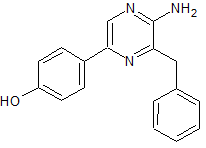
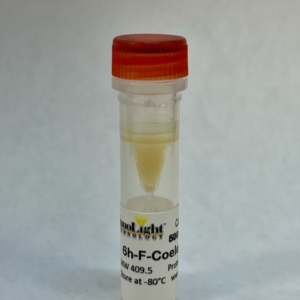
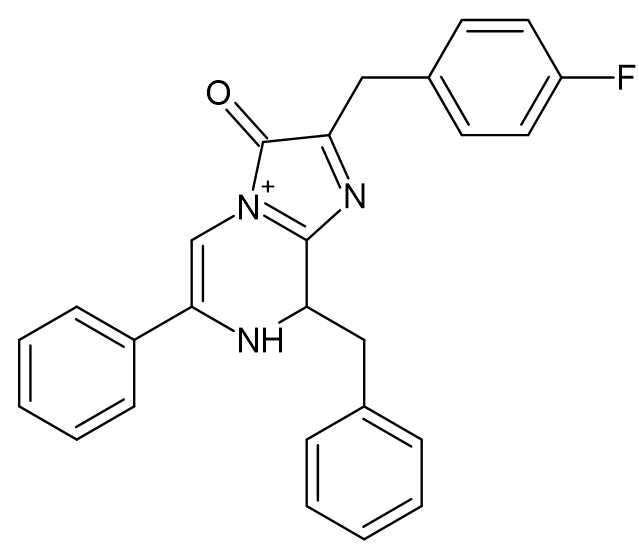
6h-F-Coelenterazine or C6d-f-Coelenterazine (C6d-f-CTZ) where the “d” stands for deoxy is a patented substrate that shows higher luminescent output with NLuc protein (NanoKAZ, NanoLuc, Oplophorus Luciferase) than Furimazine.
Details & Info
Protocols & Data
Related Products
Publications
6h-F-Coelenterazine, C6d-f-Coelenterazine Details
6h-F-CTZ (C6d-f-CTZ) offers higher luminescent activity than Furimazine.
6h-F-CTZ (C6d-f-CTZ) shows a prolonged stability in aqueous solution compared to Furimazine.
*data based on table 1 and 3 in US 9,567,623 patent.
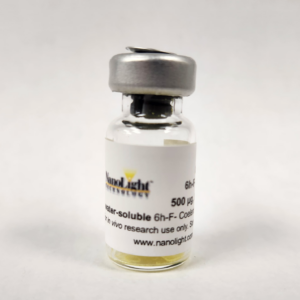
6h-F-Coelenterazine, also known as C6d-F-Coelenterazine formulated to be water-soluble and safe for in vivo imaging applications with NLuc (NanoKAZ, NanoLuc) Luciferase. Patent pending.
Details & Info
Protocols & Data
Publications
6h-F-Coelenterazine-SOL (in vivo) Details
Content
6h-F-Coelenterazine + non-toxic additives for water-solubility
Packaging size
500 µg 6h-F-CTZ / vial in a freeze-dried form
Application
just add sterile water, heat, vortex and use up to 500 µg 6h-F-CTZ in a single injection
Package Contents:
500 µgs – 1 vial of 500 µgs lyophilized SOL-6h-F-CTZ 1 mgs – 2 vials of 500 µgs lyophilized SOL-6h-F-CTZ 10 mgs – 20 vials of 500 ugs lyophilized SOL-6h-F-CTZ
6h-F-Coelenterazine is often dissolved in Propyleneglycol (PG) in combination with other alcohols for in vivo imaging studies. Large intravenous doses of PG given over a short period of time can be toxic, including hyperosmolality, increased anion gap metabolic acidosis (due to lactic acidosis), acute kidney injury, and sepsis-like syndrome.
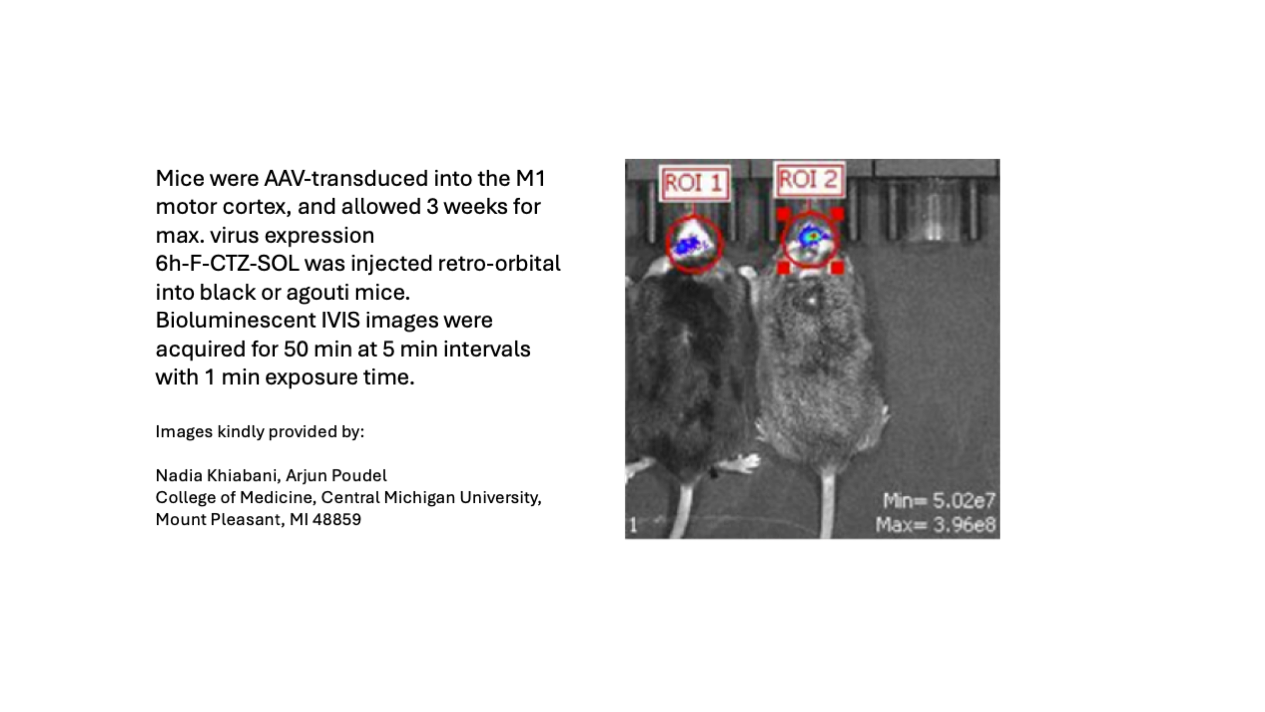
This can be avoided using water-soluble 6h-F-Coelenterazine. It is formulated to be isosmotic and easily secreted by the kidneys. Thus save for repeated i.v. injections. Water soluble Coelenterazine can be injected up to a 500 µg/100 µl concentration, achieving very high Coelenterazine levels within the body and leading to high Gaussia luciferase signals.
Application Example
Controls
We offer the solubilization vehicle without the Coelenterazine as injection control. Any side effects due to the injection process can be easily monitored, especially in sensitive applications like bioluminescent driven Optogenetics. One vial of the control (Cat. #3481-10+C) contains the same amount of solubilizer as one vial of Cat.#3481. The control will be dissolved in sterile water to create an iso-osmotic solution ready to inject.
To order control: please select ’10 mgs + 10 vials control’ under product options. This includes 20 vials of 500 µg water-soluble 6h-F-CTZ and 10 vials of control.
Please inquire if larger quantities of Cat.#3481-10+C are needed.
Protocols & Manuals
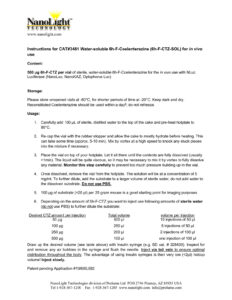
Manual for #3481
Certificates & Data
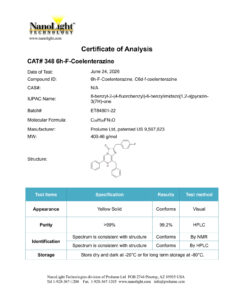
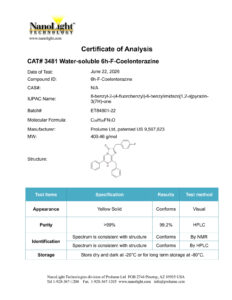
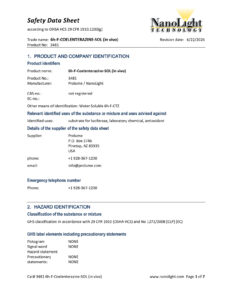
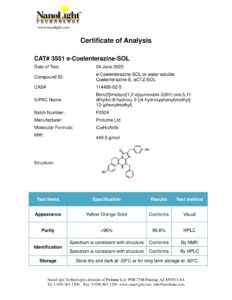
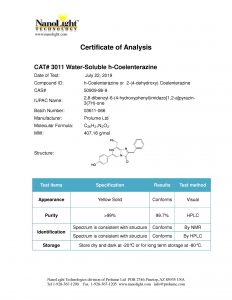
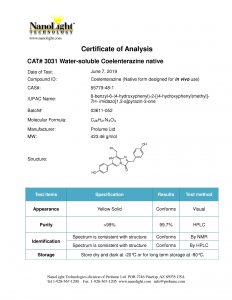
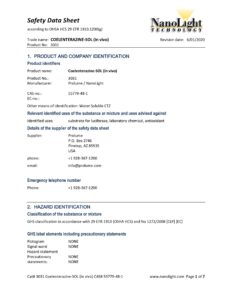
3481 COA3481 SDS
Luminopsins integrate opto- and chemogenetics by using physical and biological light sources for opsin activation. Berglund K et al.
Proc Natl Acad Sci U S A. 113(3): E358-67 (January 2016)
doi:10.1073/pnas.1510899113A Water-Soluble Coelenterazine for Sensitive In Vivo Imaging of Coelenterate Luciferases. Danielle Morse and Bakhos A Tannous
Molecular Therapy 20, 692-693 (April 2012) | doi:10.1038/mt.2012.38
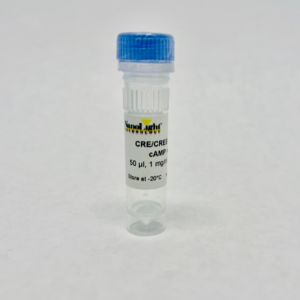
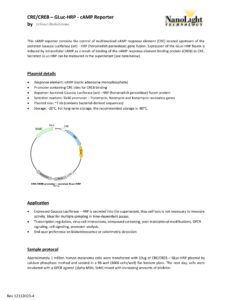
This cAMP reporter contains the control of multimerized cAMP response element (CRE) located upstream of the secreted Gaussia Luciferase (wt) – HRP (horseradish peroxidase) gene fusion. Expression of the GLuc-HRP fusion is induced by intracellular cAMP as a result of binding of the cAMP response element binding protein (CREB) to CRE. Secreted GLuc-HRP can be measured in the supernatant.
Details & Info
Protocols & Data
CRE/CREB GLuc-HRP cAMP Reporter Details
Map
Application
Expressed Gaussia Luciferase – HRP is secreted into the supernatant, thus cell lysis is not necessary to measure activity. Ideal for multiple samplingin time-dependent assays
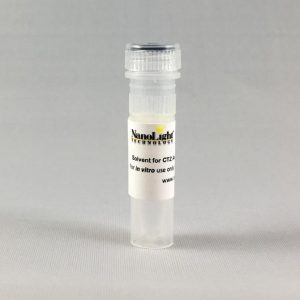
NanoFuel®-400a Solvent is NanoLight’s solution to the problem associated with the solubility of the highly hydrophobic Coelenterazine 400a.Coelenterazine-400a (DeepBlueC™) can be dissolved up to a concentration of 2.5 mg/ml.NanoFuel-400a Solvent’s proprietary preservatives also guarantee Coelenterazine 400a stability if store at -20°C for a few weeks or at -80°C for up to one year.
Details & Info
Protocols & Data
Related Products
NanoFuel-400a Solvent Details
1 ml / tube or 10 ml / tube
Optimized for IN VITRO use with the following Coelenterazine analog:
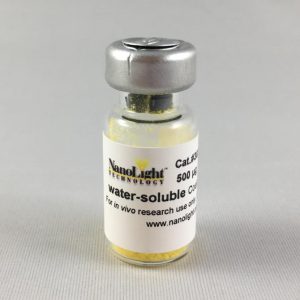
e-Coelenterazine formulated to be water-soluble and safe for in vivo imaging applications with Renilla Luciferase.
Details & Info
Protocols & Data
Publications
e-Coelenterazine-SOL (in vivo) Details
Content
e-Coelenterazine + non-toxic additives for water-solubility
Packaging size
500 ug e-CTZ / vial in a freeze-dried form
Application
just add sterile water, vortex and use up to 500 ug e-CTZ in a single injection
Package Contents:
500 ugs – 1 vial of 500 ugs lyophilized e-CTZ-SOL 1 mgs – 2 vials of 500 ugs lyophilized e-CTZ-SOL 10 mgs – 20 vials of 500 ugs lyophilized e-CTZ-SOL
e-Coelenterazine is often dissolved in Propyleneglycol (PG) in combination with other alcohols for in vivo imaging studies. Large intravenous doses of PG given over a short period of time can be toxic, including hyperosmolality, increased anion gap metabolic acidosis (due to lactic acidosis), acute kidney injury, and sepsis-like syndrome.
This can be avoided using water-soluble e-Coelenterazine. It is formulated to be isosmotic and easily secreted by the kidneys. Thus save for repeated i.v. injections. Water soluble e-Coelenterazine can be injected up to a 500 µg/100 µl concentration, achieving very high e-Coelenterazine levels within the body and leading to high Renilla luciferase signals.
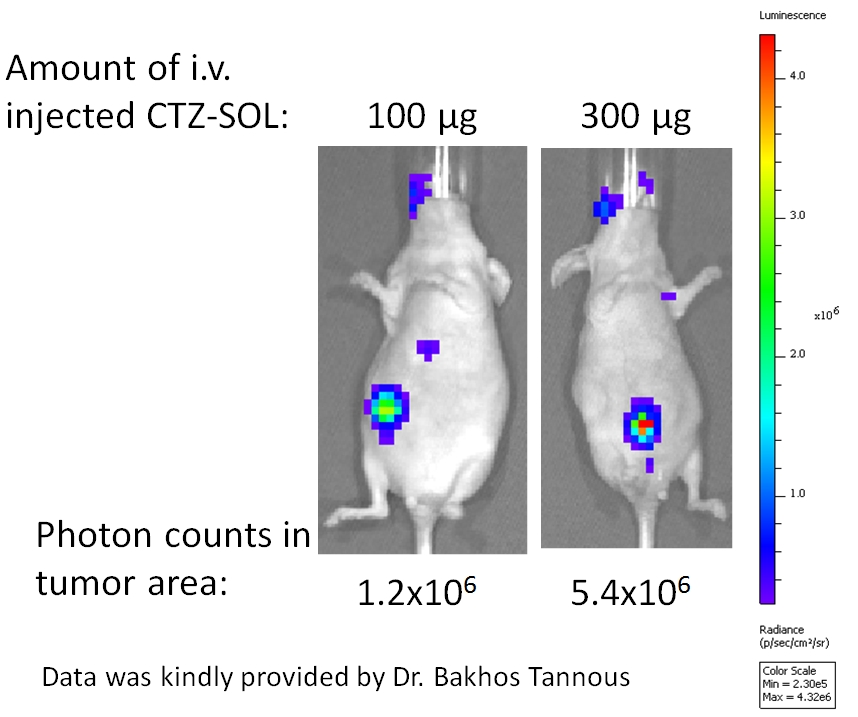
Application Example
Controls
We offer the solubilization vehicle without the e-Coelenterazine as injection control. Any side effects due to the injection process can be easily monitored. One vial of the control (Cat. #3551-10+C) contains the same amount of solubilizer as one vial of Cat.#3551. The control will be dissolved in sterile water to create an iso-osmotic solution ready to inject.
To order control: please select ’10 mgs + 10 vials control’ under product options. This includes 20 vials of 500ug water-soluble CTZ and 10 vials of control.
Please inquire if larger quantities of Cat.#3551-10+C are needed.
Protocols & Manuals
Manual #3551
Certificates & Data
COA #3551SDS #3551
Luminopsins integrate opto- and chemogenetics by using physical and biological light sources for opsin activation. Berglund K et al.
Proc Natl Acad Sci U S A. 113(3): E358-67 (January 2016)
doi:10.1073/pnas.1510899113A Water-Soluble Coelenterazine for Sensitive In Vivo Imaging of Coelenterate Luciferases. Danielle Morse and Bakhos A Tannous
Molecular Therapy 20, 692-693 (April 2012) | doi:10.1038/mt.2012.38
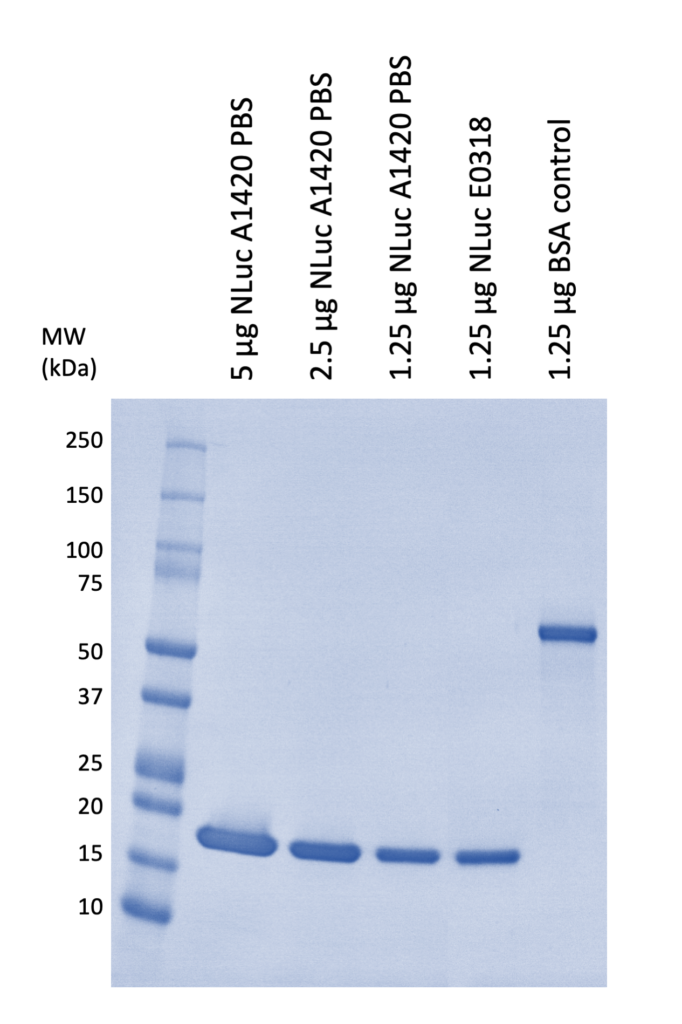
NanoKAZ Luciferase in PBS, an Oplophorus Luciferase mutant is one of the smallest and brightest luciferases. This recombinant protein was affinity purified to give it a maximum specific activity. Buffered in PBS for convenient linkage chemistry where Tris (or other primary amines) would interfere.
Patent US 9,315,783 and US 9,404,145.
Details & Info
Protocols & Data
Related Products
NanoKAZ Luciferase Protein (PBS) Details
Compound ID
NanoKAZ Luciferase (NLuc) enzyme (PBS)
MW
19.2 kDa (theoretical)
Appearance
clear liquid as 1mg/ml in TBS
Applications
as positive control in luminometer assays and general assay optimization
Production
recombinant expression in E.coli with subsequent affinity purification
We offer a special discount if you purchase the lysis-buffer with one of our Luciferase Assays. Please select “add Lysis” under product options on the Luciferase buffer website.
For intracellular expressed Gaussia Luciferase please use the lysisbuffer provided with the GLuc FLASH kit (Cat.#319)
The buffer can be stored at 4°C for up to one year or at least for 5 years at -20°C.
NanoFuel FLASH assay buffer is an alternative for assays that are using substrates like native Coelenterazine or Coeleterazine analogs to achieve even higher bioluminescent readouts with Oplophorus luciferases like NanoLuc® or NanoKAZ.
Details & Info
Protocols & Data
Related Products
NLuc FLASH Assay Details
Kit content
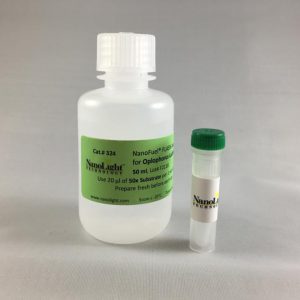
50 ml NanoFuel® FLASH Reagent for Oplophorus Luciferase
1 ml 50X NLuc FLASH Substrate
Characteristics
one-step assay
bright luminescent signal for at least a few minutes
higher sensitivity than CTZ or Furimazine
low background, higher S/N ratio
enough reagent for 1000 assays
luminometer with injection port is recommended
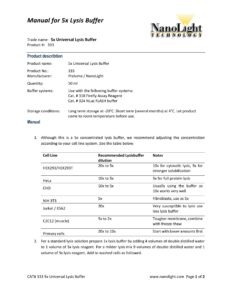
although the substrate will diffuse into the cells this process can be accelerated by a lysis step, please select “add Lysis” under product options to add 50ml of5x Universal Lysisbuffer (CAT# 333) to your order
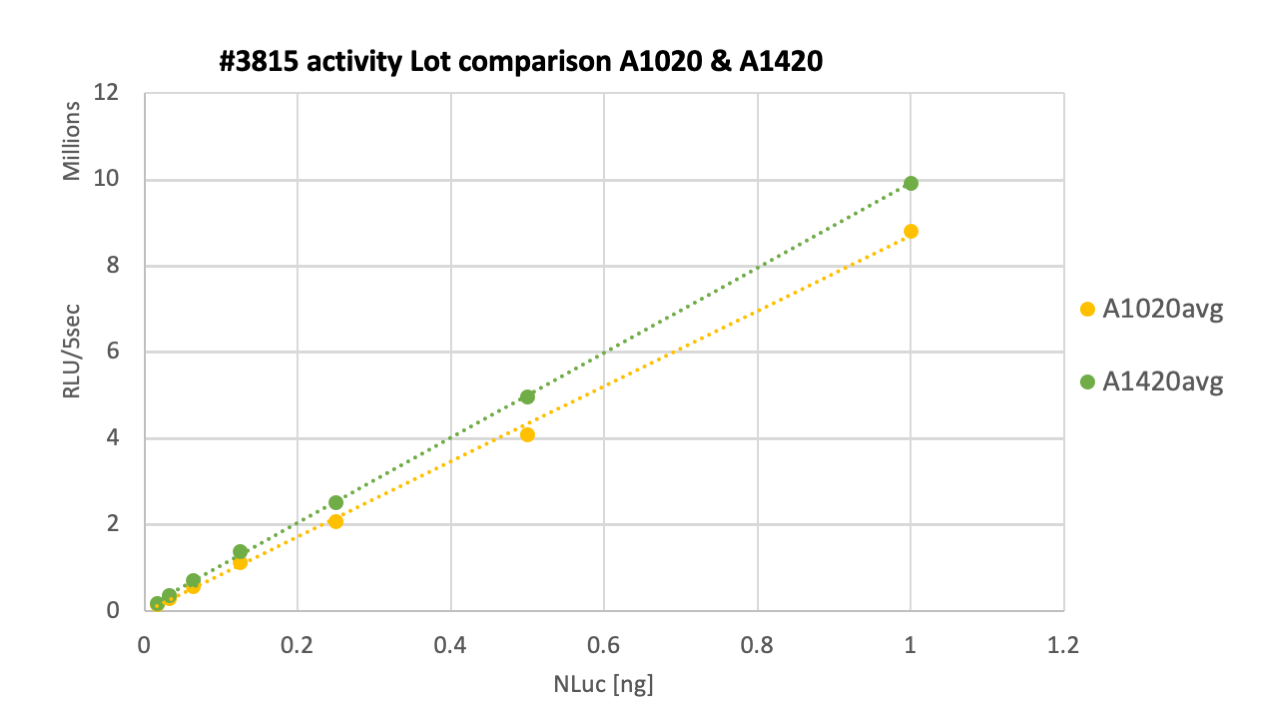
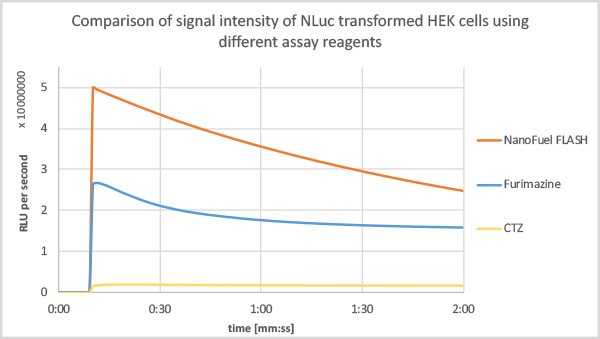
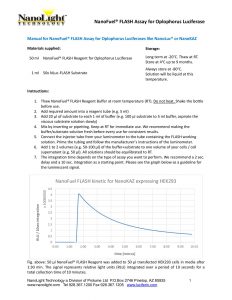
Graph below: HEK293 cells were transformed with NLuc and assayed 2 days later using a luminometer with injection port. Compared to other NLuc assay buffers, Cat. #324 increased the inital lightoutput with a reduced signal half-life. This data was kindly provided by the Neuroscience Department at Central Michigan University.
Gaussia(M2)-Luciferase-Streptavidin is a conjugate of one of the brightest luciferases and a protein with the highest known affinity in nature. This fusion protein can be used to detect trace amounts of biotinylated protein, DNA, or other biotinylated bio-molecules.
Details & Info
Protocols & Data
Related Products
Gaussia Luciferase-Streptavidin Details
Compound ID
Gaussia(M2)-Streptavidin [GLuc-SA]
Appearance
clear liquid as 1 mg/ml in buffer, aliquoted as 50 µg
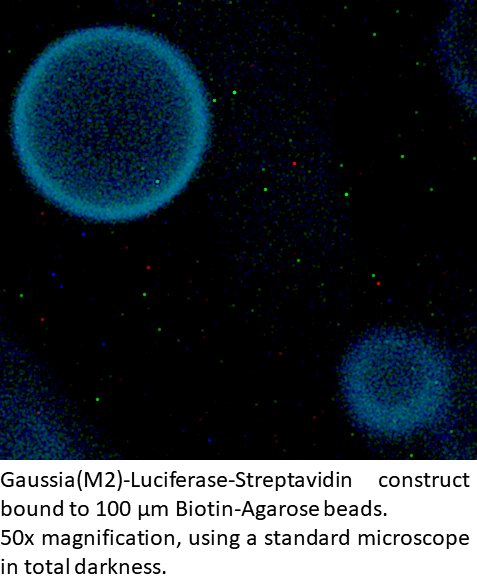
In experiments we were able to visualize the GLuc luminescence on the surface of Agarose-Biotin beads using a standard light microscope in total darkness. GLuc-SA was engineered by connecting one molecule of GLuc to one Streptavidin subunit. Streptavidin consists of 4 subunits with theoretically 4 biotin binding sites. Purified Streptavidin will have the ability to bind between 3.2 and 3.9 biotin molecules. Due to extensive purification steps, no free Streptavidin is present and cross-linking will be prevented, enabling quantitative read-outs in luminescent assays.
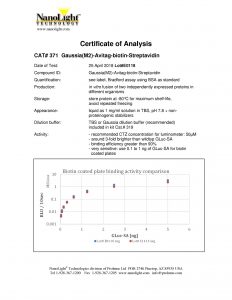
bioluminescentdetection of biotinylated biomolecules(protein, DNA, peptides) in ELISA-style assays
wide dynamic range
low background (no interfering BSA/FCS is used in this reagent)
highly sensitive
strong biotin binding
bioluminescentsurface labelinggenerating high signal/noise ratios
NanoKAZ Luciferase, an Oplophorus Luciferase mutant is one of the smallest and brightest luciferases. This recombinant protein was affinity purified to give it a maximum specific activity. Patent US 9,315,783 and US 9,404,145.
Details & Info
Protocols & Data
Related Products
NanoKAZ Luciferase (NLuc) Protein Details
Compound ID
NanoKAZ Luciferase (NLuc) enzyme
MW
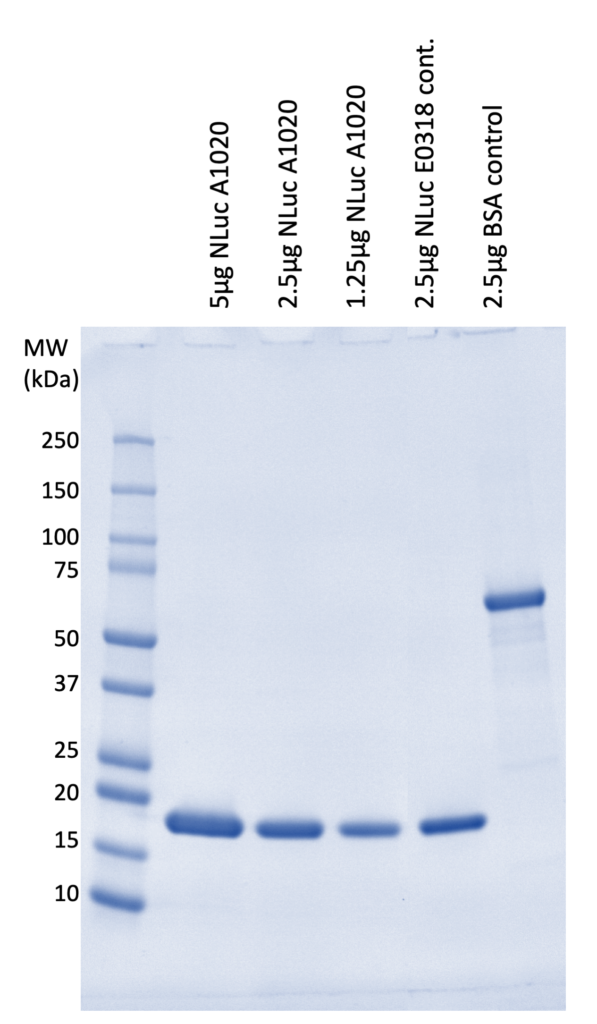
19.2 kDa (theoretical)
Appearance
clear liquid as 1 mg/ml in TBS
Applications
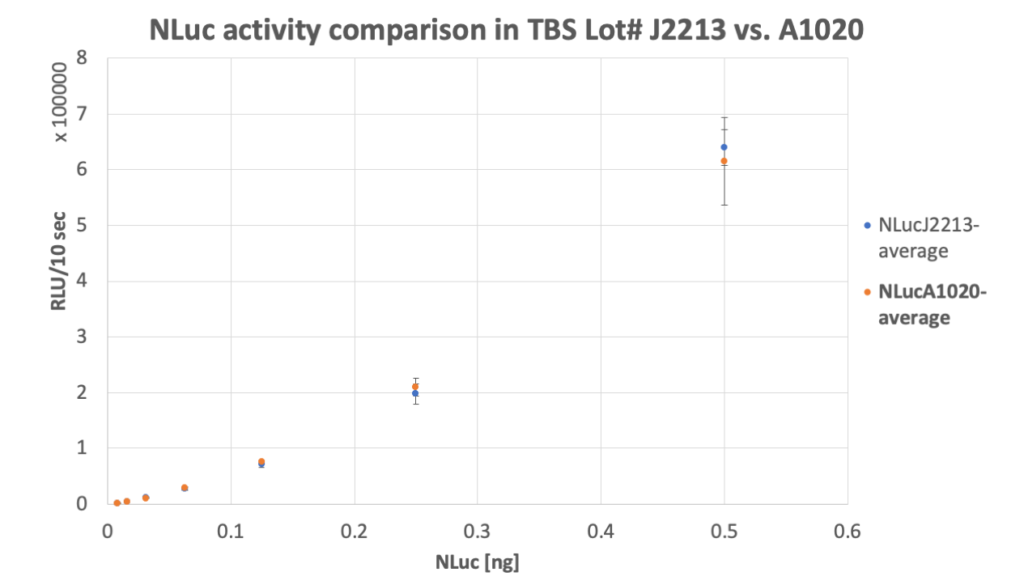
as positive control in luminometer assays and general assay optimization
Production
recombinant expression in E.coli with subsequent affinity purification
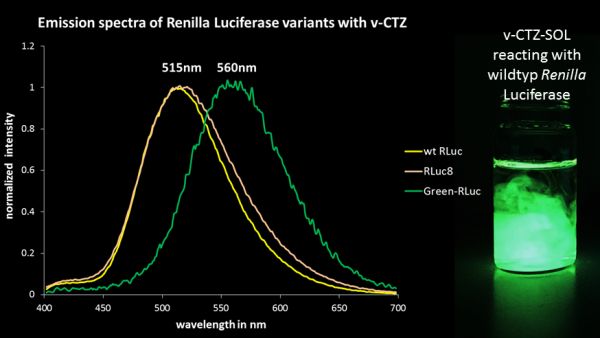
Water soluble v-Coelenterazine-SOL is an analogue of Coelenterazine that causes a shift in the emission-spectrum to longer wavelengths (515nm and above). Renilla Luciferase is the preferred catalyst for this compound. For more details see here.
Details & Info
Protocols & Data
v-Coelenterazine-SOL (in vitro) Details
Content
v Coelenterazine + additives for water-solubility
Packaging Size
adding 10ml buffer will give a 50µM solution, adding 5 ml buffer will give a 100µM solution.
Application
Just add an aqueous buffer of your choice (e.g. PBS), invert a few times and use for luminometer assays.
Luciferase
Renilla Luiferase and its mutated versions (RLuc2, RLuc8, Green Renilla Luciferase)
Advantages of water-soluble Coelenterazine
convenient to use, no pre-dissolving of h CTZ in alcohol necessary
can be used with different buffers for assay optimization
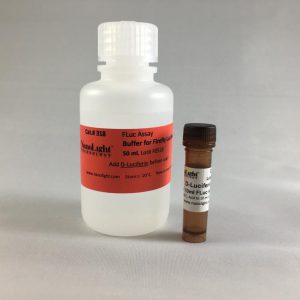
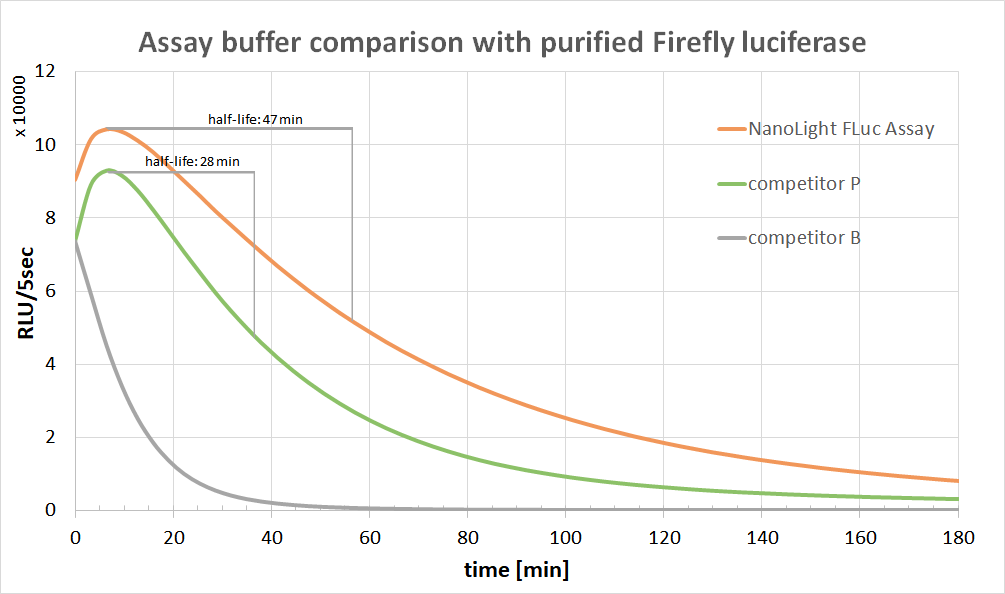
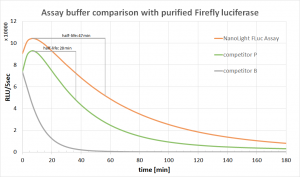
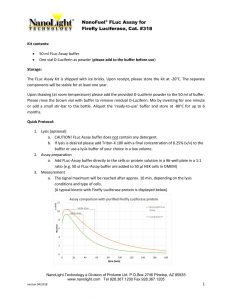
The NanoFuel® Assay kit for Firefly Luciferase kit provides enough buffer for approx. 1000 assays. Optimized buffer conditions will give you the best signal over a half-life of 45 min. Therefore no injection luminometer is required. This kit can be used for high-throughput screenings due to its steady signal.
Details & Info
Protocols & Data
Related Products
Publications
Firefly Luciferase Assay Reagent Details
FLuc Assay Kit content
50 ml FLuc Buffer – provides optimal reaction conditions
1 vial Luciferin substrate (please add to buffer before use)
Properties ofFLuc Assay Buffer
creates optimal conditions for FLuc
low background, thus higher S/N ratio
very high and steady signal
can be used in high-throughput experiments
NOTE:this buffer does not contain any detergent,
intracellular expressed FLuc will require lysis
for intracellular assays a 5x Universal Lysis Buffer (Cat.#333) can be purchased, please select“add lysis”under product options
Water-soluble h-Coelenterazine is formulated to be water-soluble and safe for in vivo imaging applications with Renilla Luciferase.
Details & Info
Protocols & Data
Related Products
Publications
h-Coelenterazine-SOL (in vivo) Details
Content
h-Coelenterazine + non-toxic additives for water-solubility
Packaging size
500 µg h-CTZ / vial in a freeze-dried form
Application
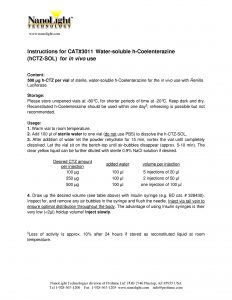
just add sterile water, vortex and use up to 500 µg CTZ in a single injection
Package Contents:
500 ugs – 1 vial of 500 ugs lyophilized SOL-CTZ-h 1 mgs – 2 vials of 500 ugs lyophilized SOL-CTZ-h 10 mgs – 20 vials of 500 ugs lyophilized SOL-CTZ-h
Coelenterazine compounds are often dissolved in Propyleneglycol (PG) in combination with other alcohols for in vivo imaging studies. Large intravenous doses of PG given over a short period of time can be toxic, including hyperosmolality, increased anion gap metabolic acidosis (due to lactic acidosis), acute kidney injury, and sepsis-like syndrome.
This can be avoided using water-soluble h-Coelenterazine. It is formulated to be isosmotic and easily secreted by the kidneys. Thus save for repeated i.v. injections. Water-soluble h-Coelenterazine can be injected up to a 500 µg/100 µl concentration, achieving very high Coelenterazine levels within the body and leading to high luciferase signals.
h-Coelenterazine is one of the preferred substrates for Renilla Luciferase.
If you use Gaussia Luciferase in your assay please use Cat. #3031
We offer the solubilization vehicle without the h-Coelenterazine as injection control. Any side effects due to the injection process can be easily monitored, especially in sensitive applications like bioluminescent driven Optogenetics. One vial of the control (Cat. #3011-10+C) contains the same amount of solubilizer as one vial of Cat.#3011. The control will be dissolved in sterile water to create an iso-osmotic solution ready to inject.
To order control: please select ’10 mgs + 10 vials control’ under available sizes. This includes 20 vials of 500 µg water-soluble h-CTZ and 10 vials of control.
Please inquire if larger quantities of Cat.#3011-10+C are needed.
A detailed describtion of this new water soluble Coelenterazine (in combination with Gaussia Luciferase) can be found in:
A Water-Soluble Coelenterazine for Sensitive In Vivo Imaging of Coelenterate
Luciferases. Danielle Morse and Bakhos A Tannous
Molecular Therapy 20, 692-693 (April 2012) | doi:10.1038/mt.2012.38
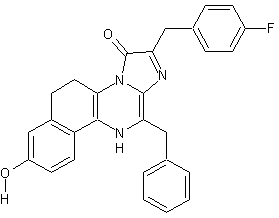
e-Coelenterazine-F purity >95% is a new Coelenterazine derivative utilized by Renilla luciferase.
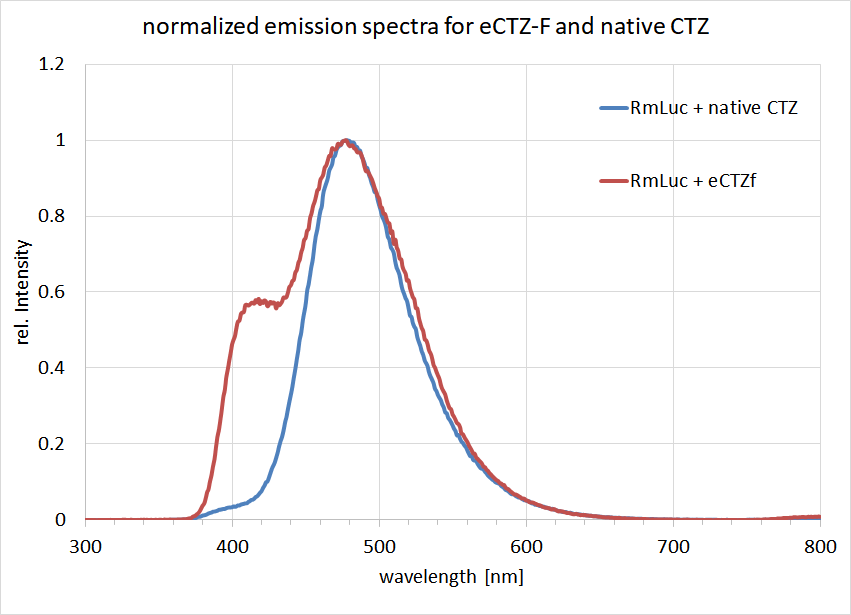
Renilla is producing a prolonged signal with a higher initial intensity than native coelenterazine, and — more distinctively — an unusually broad, dual-peaked emission spectrum spanning roughly 400–550 nm with peaks around 420 nm and 480 nm, rather than the single emission maximum typical of most coelenterazine analogs. — We recommend using CAT#399 NanoFuel Solvent for dissolving and stabilizing e-Coelenterazine-F.
Details & Info
Protocols & Data
Related Products
FAQs
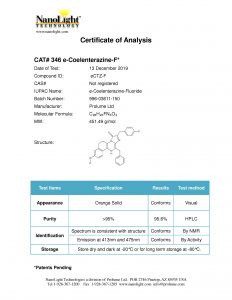
e-Coelenterazine-F Details
Compound ID
eCoelenterazine-F
Molecular Formula
C28H22FN3O2
CAS#
not registered
MW
451.49 g/mol
Emission spectrum of eCTZ-F
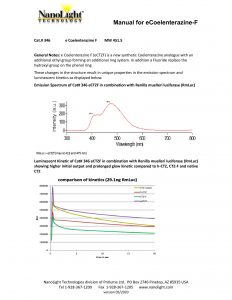
eCTZ-F is showing a unique emission spectrum in combination with Renilla Luciferase (RLuc), emitting a high energy wide spectrum from 400 to 550 nm. Please see the manual for details.
The luciferin is shipped as filtered, lyophilized, batch controlled substrate in 500 µg and 1 mg aliquots (1 mg = 2x 500 µg).
10 mgs is packed as regular powder in one tube.
Advantages
pre-aliquoted in small amounts, fresh substrate for every set of experiments
long shelf-life (packed under Argon)
faster to dissolve due to its fine crystal structure
Prolume developed eCTZ-F for commercial usage. Therefore it is a very new compound to the scientific community. Please contact us if you are interested in a collaboration regarding eCTZ-F.
eCTZ-F is showing unique properties in the emission spectrum, peaking at 420 and 480 nm.
In terms of reaction kinetic, eCTZ-F is displaying a prolonged signal with a higher inital intensity using Renilla Luciferase compared to native Coelenterazine.
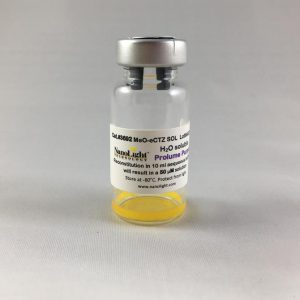
Methoxy e-Coelenterazine (Prolume Purple) formulated to be water-soluble for in vitro applications with Renilla Luciferase.
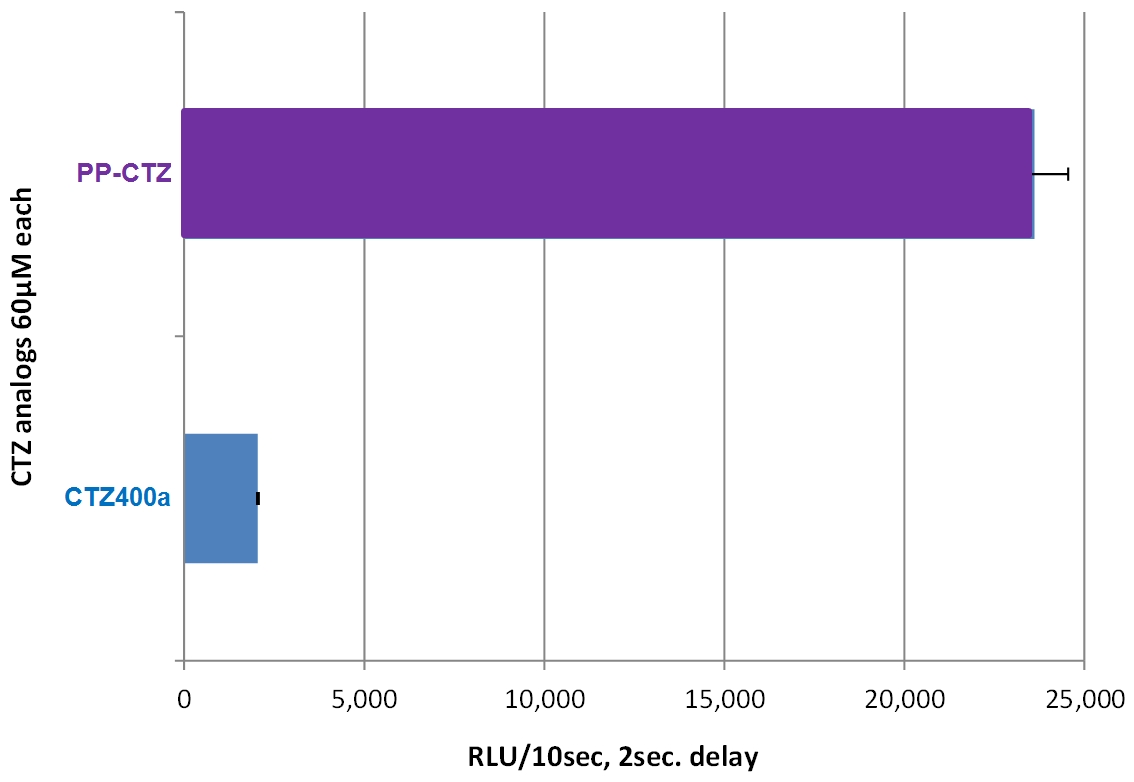
Prolume Purple exhibits an up to 13-fold higher luminescence than CTZ400a (“deep blue C”).
Details & Info
Protocols & Data
Related Products
Publications
Prolume Purple- SOL (in vitro) Details
Content
Methoxy e-Coelenterazine + non-toxic additives for water-solublity.
Packaging Size
adding 10ml of buffer will give a 50 μM solution, adding 5 ml buffer will give a 100 μM solution.
Application
Just add your buffer, vortex and use with for example in BRET assays
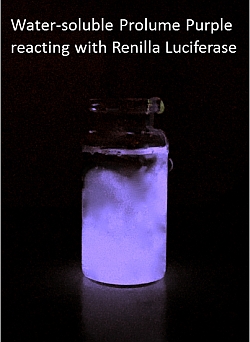
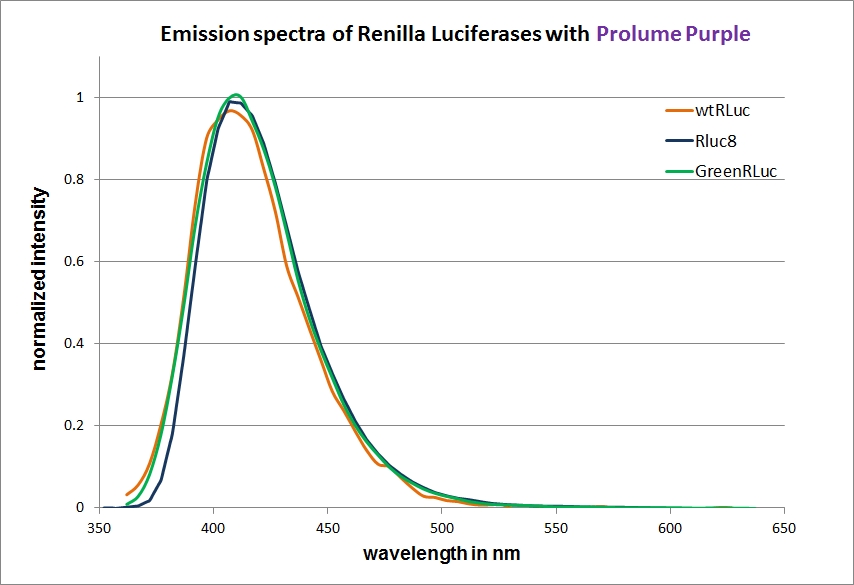
For details about the properties of Prolume Purple please refer to the information listed for Prolume Purple (Cat.#369) . The emission maximum with Renilla Luciferase is 405 nm thus emitting a purple light. Nanolight™ Technologies developed Prolume Purple. Patent pending.
Advantages of water-soluble Coelenterazine
convenient to use, no pre-dissolving of h CTZ in alcohol necessary
can be used with different buffers for assay optimization
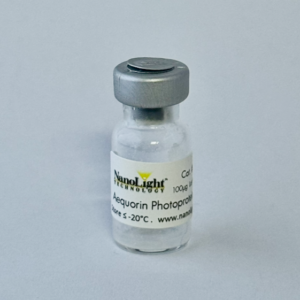
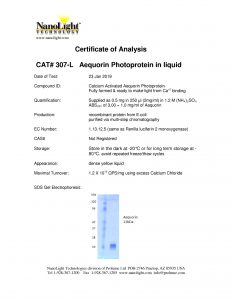
A photoprotein originating from the jellyfish Aequorea victoria emits light in the presence of a trace amount of Ca2+ without the requirement of any other cofactor. Aequorin was “charged” with unmodified (native) Coelenterazine and will emit light at 465 nm upon Ca2+ contact.
Details & Info
Protocols & Data
Related Products
Aequorin photoprotein (lyophilized) Details
Aequorin photoprotein (untagged) is recombinantly produced in E. coli, purified via multi-step chromatography and appears as a white lyophilized powder.
Reconstitution
with Ca2+ free double distilled water
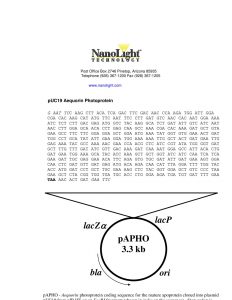
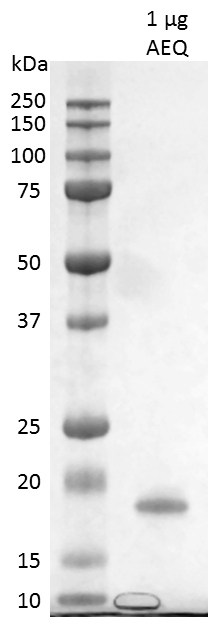
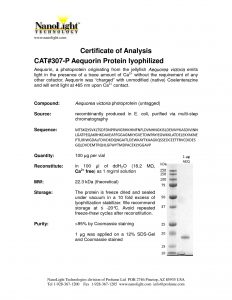
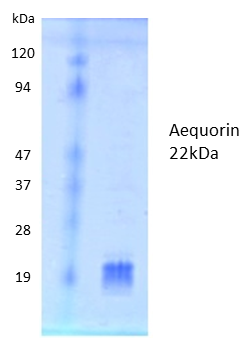
Sequence for Aequorin-2 (P02592), 196 amino acids, 22.3 kDa
Designed by NanoLight to increase the solubility of v-Coelenterazine and Methoxy v-Coelenterazine-Methoxy. Both compounds have a very low solubility in Ethanol and Methanol. Using NanoFuel-V solvent gives you v-CTZ concentrations of up to 4 mg/ml.
Details & Info
Protocols & Data
Related Products
FAQs
NanoFuel-V Solvent Details
1 ml/tube
Optimized for IN VITRO use with following Coelenterazine analogs:
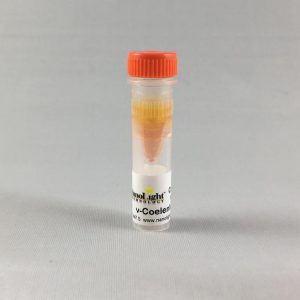
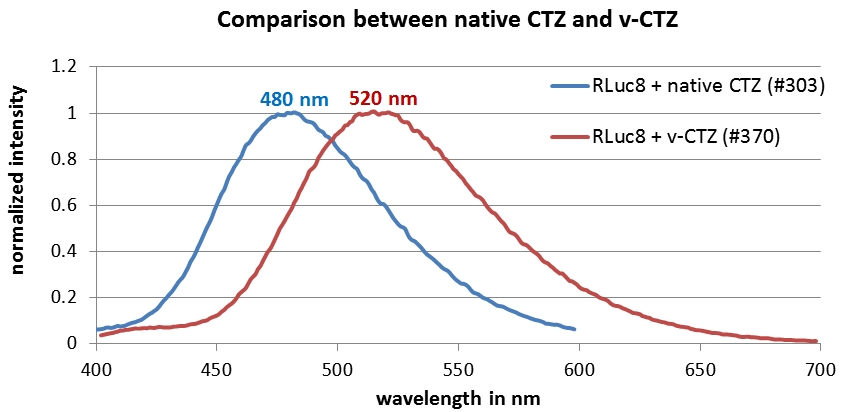
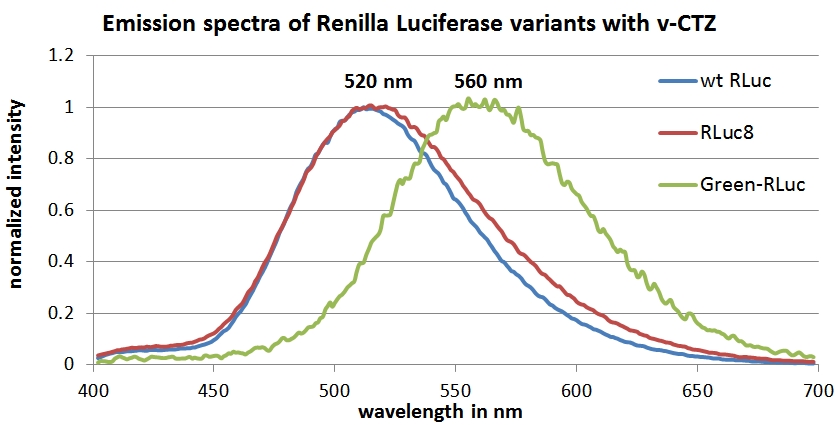
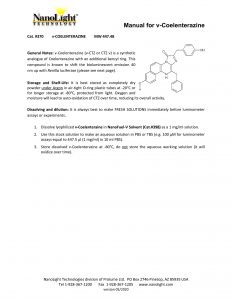
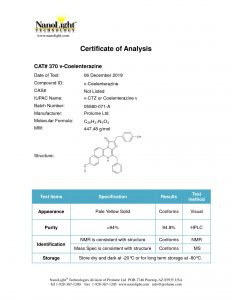
V-Coelenterazine (V-CTZ) is a synthetic analogue of Coelenterazine with an additional Benzyl ring. This compound has the unique ability to shift the emission spectra of wildtyp Renilla Luciferase, RLuc8 and Green Renilla Luciferase to longer wavelengths.
With Ca²⁺-regulated photoprotein obelin, native coelenterazine gives a peak at 480 nm (shoulder ~400 nm), while obelin reconstituted with CTZ-v (“obelin-v”) shifts to a peak at 532 nm (shoulder ~415 nm) — a substantial red-shift. Aequorin shows a similar shift.
V-Coelenterazine is particular difficult to get into solution. We recommend using CAT#398 NanoFuel-V Solvent for dissolving and stabilizing v-Coelenterazine.
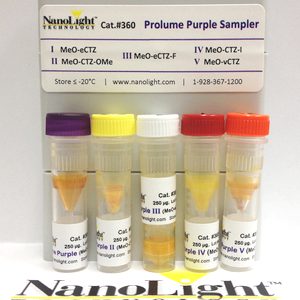
Nanolight™ Technologies patented methoxy Coelenterazine compounds are now available as a comprehensive sampler kit.
Nanolight Technology is pleased to introduce these newly developed coelenterazine compounds. Your feedback is appreciated, if you find any additional luciferases or luciferase mutants that work with these compounds, please contact us at info@prolume.com.
Details & Info
Related Products
Prolume Purple Sampler Details
Prolume Purple Sampler content (250 ug each)
content of the kit:
250 ug of Prolume Purple
250 ug of Prolume Purple II
250 ug of Prolume Purple III
250 ug of Prolume Purple IV
250 ug of Prolume Purple V
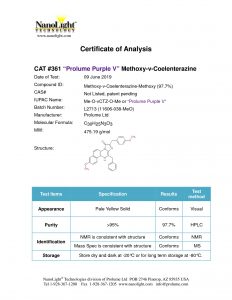
Methoxy-v-Coelenterazine-Methoxy (Me-O-v-CTZ-O-Me) is a new synthetic analogue of v-Coelenterazine with two additional methoxy groups. So far we were not able to determine a luciferase that is working with this unique compound. Activities with RLuc8, Rluc3 and Green Renilla Luciferase are very low.
Nanolight™ Technologies developed Prolume Purple V. (US Patent 2013/057660).
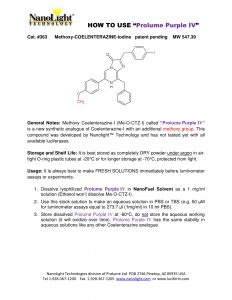
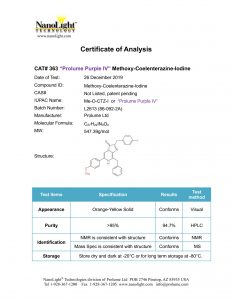
Prolume Purple IVor Methoxy-Coelenterazine-Iodine (Me-O-CTZ-I) is a new synthetic analogue of Coelenterazine-I with an additional methoxy group. So far we were not able to determine a luciferase that is working with this unique compound. Activity with RLuc8, Rluc3 and Green Renilla Luciferase were very low.
Nanolight™ Technologiesdeveloped Prolume Purple IV. (US Patent 2013/057660).
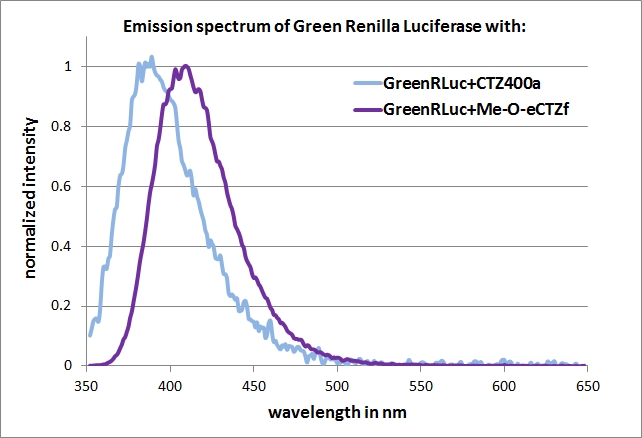
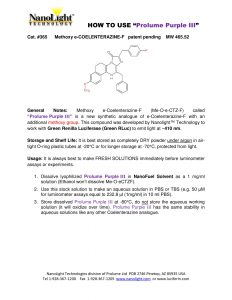
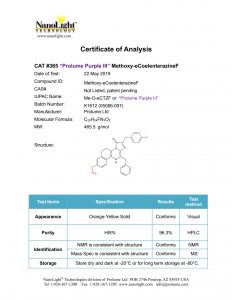
Methoxy-eCoelenterazine-F (Me-O-eCTZ-F) is a new synthetic analogue of e-Coelenterazine-F with an additional methoxy groups emitting at 410nm with Green Renilla Luciferase. Nanolight™ Technologies developed Prolume Purple III. (US Patent 2013/057660)
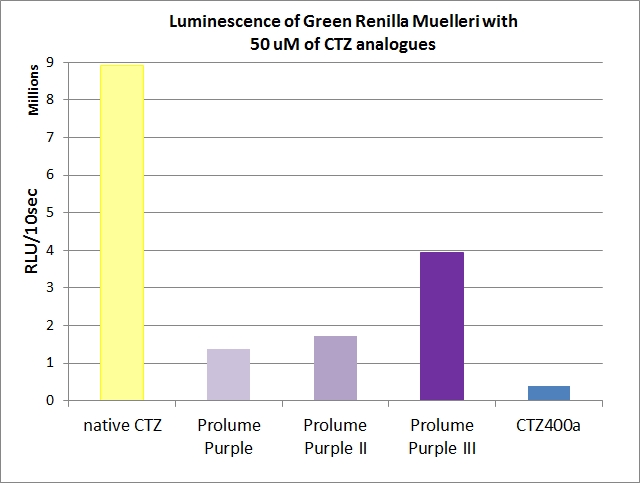
Prolume Purple III exhibits an up to 10-fold higher luminescence than CTZ400a (“deep blue C”).
If you are using RLuc8 or wildtyp Renilla Luc please use Prolume Purple (Cat.# 369).
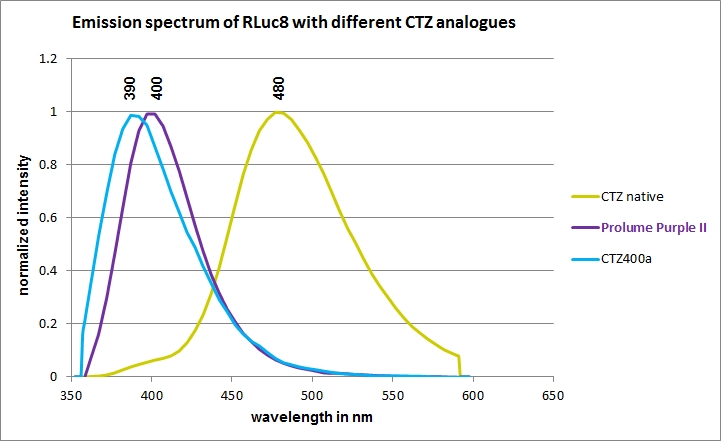
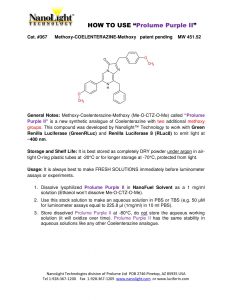
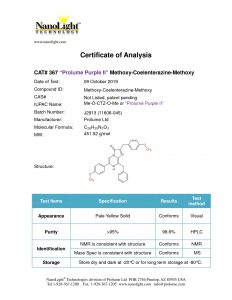
Prolume Purple II or Methoxy-Coelenterazine-Methoxy (Me-O-CTZ-O-Me) is a new synthetic analogue of Coelenterazine with two additional methoxy groups emitting at 400nm with Renilla Luciferase 8 (RLuc8) and Green Renilla Luciferase. Nanolight™ Technologiesdeveloped Prolume Purple II (US Patent 2013/057660).
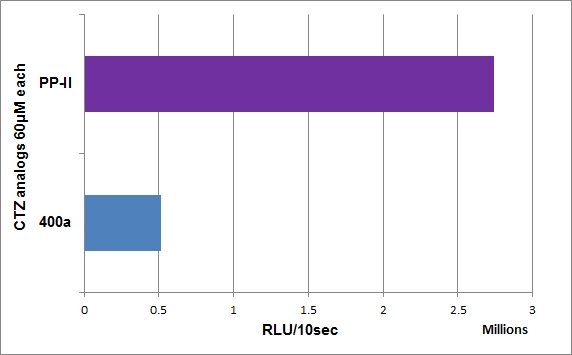
Prolume Purple IIexhibits an up to 5-fold higher luminescence than CTZ400a (“deep blue C”).
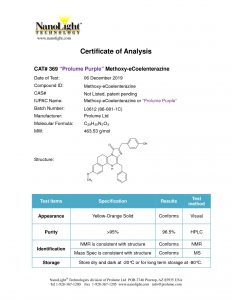
Prolume Purpleor methoxy e-Coelenterazine (Me-O-e-CTZ) is a new synthetic analogue of e-Coelenterazine with an additional methoxy group quenching the emission maximum from 475 nm to 405 nm. Nanolight™ Technologies developed Prolume Purple.(US Patent 2013/057660)Prolume Purple exhibits an up to 13-fold higher luminescence than CTZ400a (“deep blue C”).
Details & Info
Protocols & Data
Related Products
Publications
Prolume Purple Details
Compound ID
Prolume Purple (PP-CTZ)
Molecular Formula
C29H25N3O3
Alternative Name
methoxy e-Coelenterazine (me-O-eCTZ)
MW
463.53
Application
emits around 405 nm with RLuc, RLucII, RLuc3, RLuc8 and Green Renilla Luc useful as a substrate in bioluminescence imaging (BLI) with near-infrared BRET partners.
Prolume Purple (Cat. #369) was enabling these researches to follow protein movement within a single cell in real-time for up to 20 min using a sophisticated BRET system.
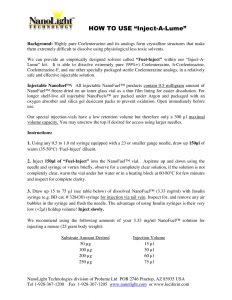
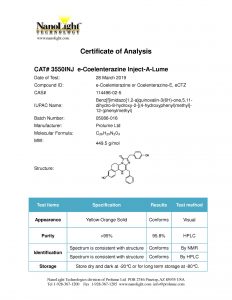
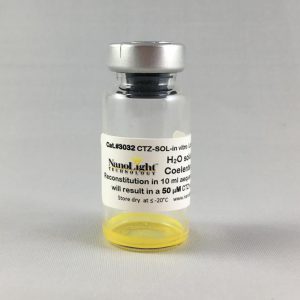
e-CTZ is now available in sterile injection vials with a low retention volume. Each kit is suppled with two ‘Inject-A-Lume’ vials of 500 ug e-CTZ and 500 ul of steril ‘Fuel-Inject’ diluent. It was reported that this analogue enhances the signal by two-fold in Renilla Luciferase in vivo studies.
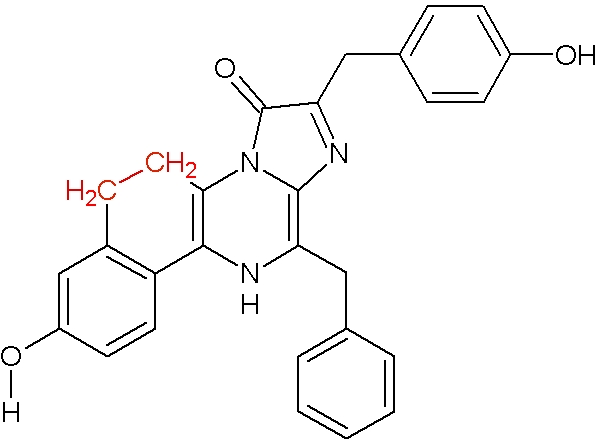
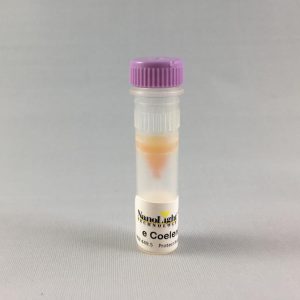
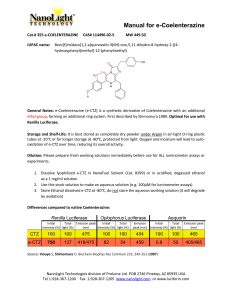
e-coelenterazine or Coelenterazine-E (e-CTZ) is a synthetic analogue of native Coelenterazine with an additional ethyl group, forming an additional ring system. First described by Shimomura in 1989.
For Renilla muelleri Luciferase, an increase of 750% in initial intensity and 137% in total light was observed using e-Coelenterazine compared to naitve Coelenterazine.
Note: In will not be utilized by Gaussia Luciferase.
A water-soluble form for in vitro applications.For additional convenience h-Coelenterazine is now available in a water-soluble form aliquoted in tubes that will give you a 50 µM solution by adding 10 ml of buffer.
Details & Info
Related Products
h-Coelenterazine-SOL (in vitro) Details
Content
h-Coelenterazine + non-toxic additives for water-solubility
Packaging size
adding 10ml buffer will give a 50µM solution, adding 5 ml buffer will give a 100µM solution.
Application
Just add an aequeous buffer of your choice (e.g. PBS), vortex and use for luminometer assays.
Advantages of water-soluble Coelenterazine
convient to use, no pre-dissolving of h CTZ in alcohol necessary
can be used with different buffers for assay optimization
Native Coelenterazine in a water-soluble form for in vitro applications with Gaussia Luciferase.
For additional convenience native Coelenterazine is now available in a water-soluble form aliquoted in tubes that will give you a 50 µM solution by adding 10 ml of buffer.
Details & Info
Protocols & Data
Coelenterazine-SOL (in vitro) Details
Content
native Coelenterazine + additives for water-solubility
Packaging size
adding 10 ml buffer will give a 50 µM solution, adding 5 ml buffer will give a 100 µM solution.
Application
add an aequeous buffer of your choice (e.g. PBS), vortex and use for luminometer assays.
Application Example
Advantages of water-soluble Coelenterazine
convenient to use, no pre-dissolving of h CTZ in alcohol necessary
can be used with different buffers for assay optimization
Native Coelenterazine formulated to be water-soluble and safe for in vivo imaging applications with Gaussia Luciferase. No toxic side effects, superior luminescence compared to conventionally intra-peritoneal injected substrate.
Details & Info
Protocols & Data
Related Products
Publications
Coelenterazine-SOL (in vivo) Details
Content
native Coelenterazine + non-toxic additives for water-solubility
Packaging size
500 ug CTZ / vial in a freeze-dried form
Application
just add sterile water, vortex and use up to 500 ug CTZ in a single injection
Package Contents:
500 ugs – 1 vial of 500 ugs lyophilized SOL-CTZ 1 mgs – 2 vials of 500 ugs lyophilized SOL-CTZ 10 mgs – 20 vials of 500 ugs lyophilized SOL-CTZ
Coelenterazine is often dissolved in Propyleneglycol (PG) in combination with other alcohols for in vivo imaging studies. Large intravenous doses of PG given over a short period of time can be toxic, including hyperosmolality, increased anion gap metabolic acidosis (due to lactic acidosis), acute kidney injury, and sepsis-like syndrome.
This can be avoided using water-soluble Coelenterazine. It is formulated to be isosmotic and easily secreted by the kidneys. Thus save for repeated i.v. injections. Water soluble Coelenterazine can be injected up to a 500 µg/100 µl concentration, achieving very high Coelenterazine levels within the body and leading to high Gaussia luciferase signals.
Application Example
Use our water-soluble Coelenterazine with one of the most advanced in vivo imaging systems: PRISM Bio-Box.
Controls
We offer the solubilization vehicle without the Coelenterazine as injection control. Any side effects due to the injection process can be easily monitored, especially in sensitive applications like bioluminescent driven Optogenetics. One vial of the control (Cat. #3031-10+C) contains the same amount of solubilizer as one vial of Cat.#3031. The control will be dissolved in sterile water to create an iso-osmotic solution ready to inject.
To order control: please select ’10 mgs + 10 vials control’ under product options. This includes 20 vials of 500ug water-soluble CTZ and 10 vials of control.
Please inquire if larger quantities of Cat.#3031-10+C are needed.
Luminopsins integrate opto- and chemogenetics by using physical and biological light sources for opsin activation. Berglund K et al.
Proc Natl Acad Sci U S A. 113(3): E358-67 (January 2016)
doi:10.1073/pnas.1510899113A Water-Soluble Coelenterazine for Sensitive In Vivo Imaging of Coelenterate Luciferases. Danielle Morse and Bakhos A Tannous
Molecular Therapy 20, 692-693 (April 2012) | doi:10.1038/mt.2012.38
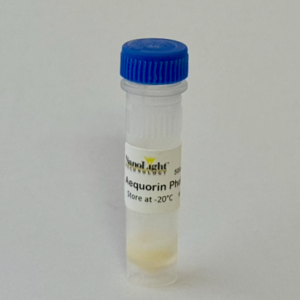
A photoprotein originating from the jellyfish Aequorea victoria emits light in the presence of a trace amount of Ca2+ without the requirement of any other cofactor. Aequorin was “charged” with unmodified (native) Coelenterazine and will emit light at 465 nm upon Ca2+ contact.
Details & Info
Protocols & Data
Related Products
Aequorin photoprotein (liquid) Details
Aequorin photoprotein (untagged) is recombinantly produced in E. coli, purified via multi-step chromatography and appears as a yellow liquid.
e-Coelenterazine or Coelenterazine-E (e-CTZ) is a synthetic analogue of native Coelenterazine with an additional ethyl group, forming an additional ring system. First described by Shimomura in 1989.
Renilla muelleriLuciferase shows an increase of750% in initial intensityand137% in total light using e-Coelenterazine compared to native Coelenterazine.
Also available as water-soluble form (Cat.# 3551) for in vivo experiments.
NanoFuel® Solvent is NanoLight’s solution to the problem associated with the solubility of Coelenterazine and the many new Coelenterazine analogs that have been made available in recent years. Native Coelenterazine can be dissolved in a 10 times higher concentration compared to other alcohols.NanoFuel-Solvent also guarantees Coelenterazine stability if store at -20°C for a few weeks or at -80°C for up to one year.
Details & Info
Protocols & Data
FAQs
Related Products
NanoFuel Solvent Details
1 ml / tube
Optimized for IN VITRO use with our following Coelenterazine analogs .
NanoFuel-Solvent was specifically prepared to preserve the luciferins as long as possible. We only use fresh HPLC grade reagents that were additionally dried and degased to remove any oxidizing compounds. We can’t guarantee the product stability if you used a 5 year old bottle of denatured alcohol to dissolve your CTZ.
Coelenterazine (native-CTZ) in sterile injection vials with a low retention volume. Each kit is supplied with two ‘Inject-A-Lume’ vials of 500 µg CTZ and 500 µl of sterile ‘Fuel-Inject’ diluent.
‘Fuel-Inject’ will improve the luciferase signal compared to conventional Ethanol-dissolved CTZ.
Recommended path of injection: intra-peritoneal cavity.
For more frequent injections we recommend our water-soluble Coelenterazine.
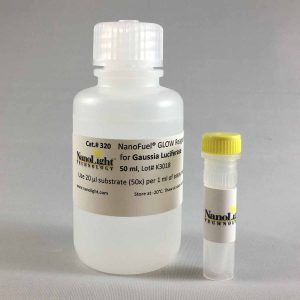
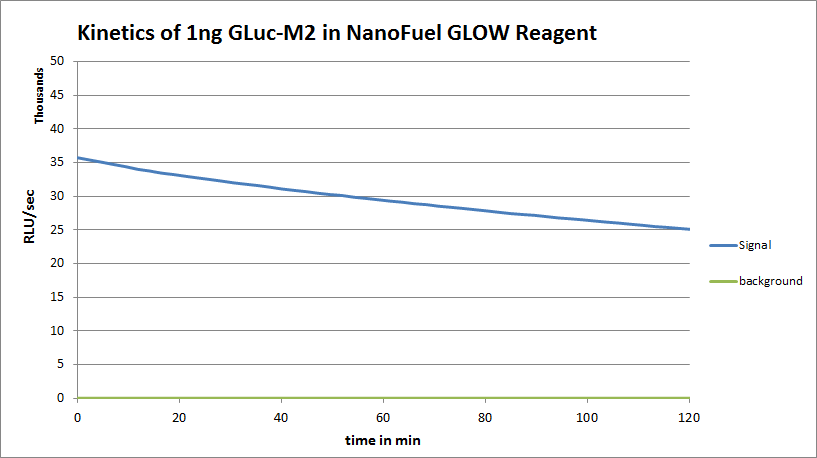
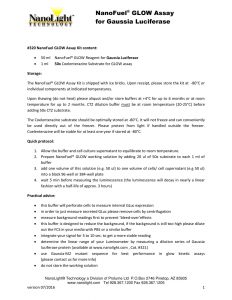
Introducing a new one-step GLOW Assay kit for high-throughput screenings (HTS). This kit includes a buffer that will prolong your Gaussia signal over several hours. The half-life of Gaussia in this buffer system is between 2 to 3 hours.
Details & Info
Protocols & Data
Publications
Related Products
GLOW Assay Kit content
(sufficient for approx. 1000 assays)
50 ml NanoFuel® GLOW Reagent for Gaussia Luciferase
1 ml 50x Coelenterazine Substrate for GLOW assay
GLuc GLOW Assay Details
Advantages
one-step assay reagent (lysis-, dilution- and assay-buffer in one solution)
stable luminescent signal (2-3 hours half-life)
detection of secreted Gaussia Luciferase
detection of intracellular expressed Gaussia Luciferase
low background, thus high Signal to Noise ratio
Protocols & Manuals
For optimal results and a long lasting glow kinetic please use following Gaussia-M2 sequence (Welsh et al. , Multiply mutated Gaussia luciferases provide prolonged and intense bioluminescence, Biochemical and Biophysical Research Communications 389 (2009) 563–568):
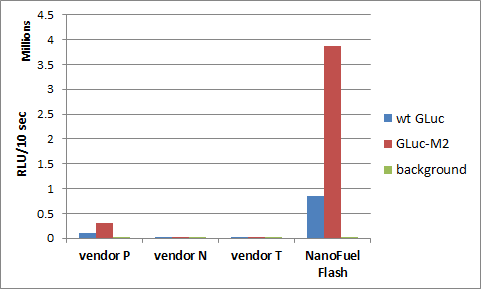
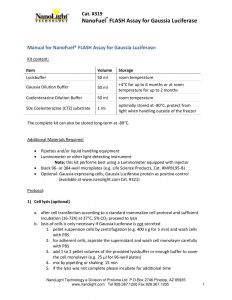
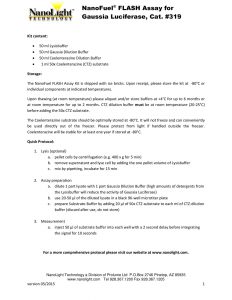
NanoFuel® FLASH Assay for Gaussia Luciferase
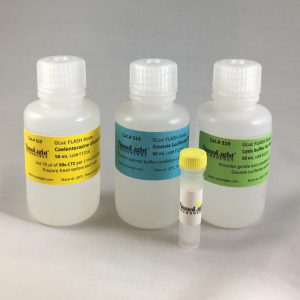
The NanoFuel® FLASH Assay kit provides enough buffer for approx. 1000 assays and performs best with a luminometer equipped with an injection port. For assays requiring a longer lasting luminescence (e.g. high-throughput screenings) or if sensitivity is not an issue we recommend our NanoFuel GLOW Assay kit (Cat. #320).
Details & Info
Package Info & Data
Publications
Related Products
FLASH Assay Kit content:
50 ml Lysisbuffer – optimized for mild lysis and minimal GLuc activity reduction
50 ml Gaussia Dilution Buffer – stabilizes GLuc and provides optimal reaction conditions
50 ml Coelenterazine Dilution Buffer – stabilizes CTZ in aequeous solution
1 ml 50x Coelenterazine (CTZ) substrate containing >95% pure CTZ
GLuc FLASH Assay Details
Advantages of the FLASH Assay Reagent for Gaussia Luciferase:
creates optimal conditions for GLuc and mutated GLuc versions
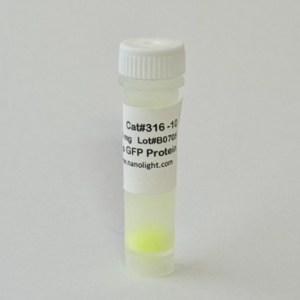
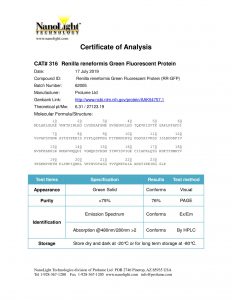
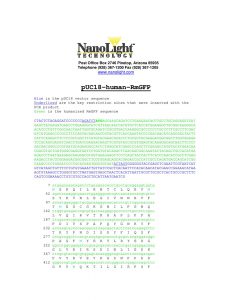
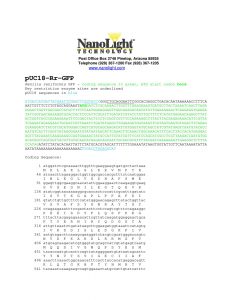
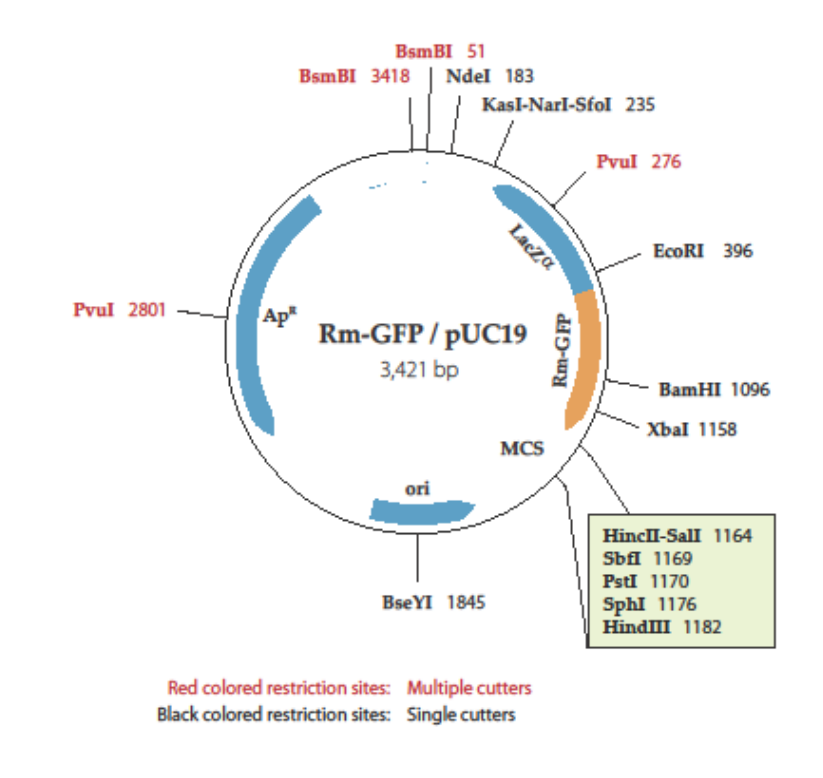
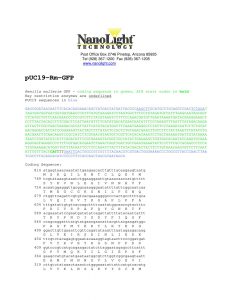
Highly purified single band on SDS gels, very active and bright GFP. Has much higher absortion and 495nm excitation, with 3X the fluorescence of eGFP or Aequoia GFP. Emission at 508nm. For best performance should be used with proper filter set.
Details & Info
Protocols & Data
Renilla Reniformis GFP Details
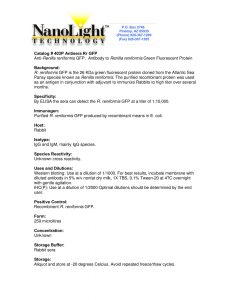
Renilla Reniformis GFP is a highly purified green fluorescent protein isolated from the sea pansy Renilla reniformis, giving researchers a brighter, high-purity alternative to standard fluorescent tags. With excitation and emission maxima at 495 nm and 508 nm respectively, it delivers roughly three times the brightness of eGFP or Aequorea GFP, making it a strong choice for applications where signal strength is critical. Each lot is verified as a single band on SDS-PAGE, consistent with the purity standard behind every NanoLight fluorescent protein. Supplied purified and ready for use, it should be stored dark at -20°C (or -80°C for extended shelf life) and ships at room temperature via overnight or 2-day domestic courier. Available in 1 mg and 10 mg sizes, with a Certificate of Analysis available for download.
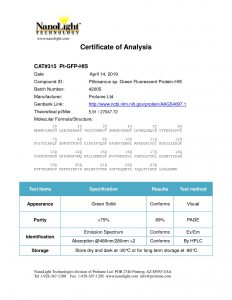
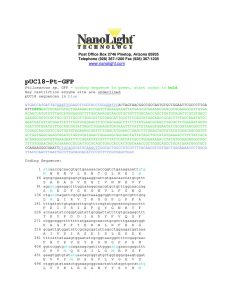
Highly purified single band on SDS gels, very active and bright GFP. Has much higher absortion and 495nm excitation, with 3X the fluorescence of eGFP or Aequoia GFP. Emission at 508nm. For best performance should be used with proper filter set.
Details & Info
Protocols & Data
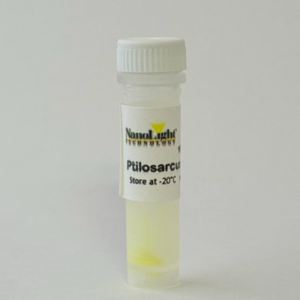
Ptilosarcus Green Fluorescent protein Details
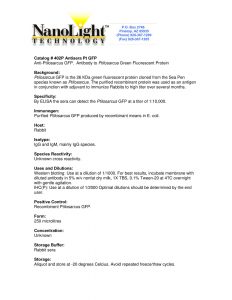
Ptilosarcus GFP is a highly purified, His-tagged green fluorescent protein isolated from the sea pen Ptilosarcus, offering researchers a brighter alternative to conventional fluorescent tags. With excitation and emission maxima at 495 nm and 508 nm respectively, this ~27 kDa protein delivers roughly three times the brightness of eGFP or Aequorea GFP, along with substantially higher absorption — making it well suited for applications where signal intensity matters most. Each lot runs as a single band on SDS-PAGE, reflecting the purity standard behind every NanoLight fluorescent protein. Supplied as a stable solid, it should be stored dark at -20°C (or -80°C for long-term storage) and ships at room temperature via overnight or 2-day domestic courier. Available in 1 mg and 10 mg sizes to fit both pilot studies and larger-scale work.
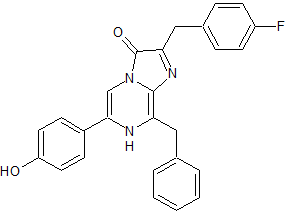
Coelenterazine F is the preferred substrate for Aequorin and used as based calcium indicator.
When it reconstitutes apoaequorin into functional aequorin, it produces roughly 20-fold higher luminescence intensity than native coelenterazine does at the same (100 nM) Calcium concentration, with emission shifted slightly to the red (~472–473 nm vs. ~465 nm for native). Recommended when high Calcium sensitivity of regenerated Aequorin is needed.
We recommend using CAT#399 NanoFuel Solvent for dissolving and stabilizing native Coelenterazine.
Details & Info
Protocols & Data
Related Products
Coelenterazine F Details
Compound ID
Coelenterazine-Fluoride or Coelenterazine F or CTZ-F
A substrate for Renilla luciferases (Rluc) but not Gaussia luciferase. It is used for real-time detection of calcium ions, gene reporter assays and a favored substrate for BRET (BRET2-style). This derivative has an emission maximum around 400 nm and therefore minimal interference with the emission of the GFP acceptor.
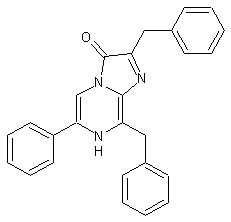
Coelenterazine 400a is also know under the Perkin Elmer trademark DeepBlueC™.
We recommend using specifically developed CAT#397NanoFuel-400a Solvent for dissolving and stabilizing Coelenterazine 400a for a high concentration of up to 2.5 mg/ml.
Regular NanoFuel Solvent Cat#399 will only be able to dissolve CTZ 400a up to a 1 mg/ml concentration.
There are a few mutated versions of Renilla Luciferase (e.g. RLuc8, RLuc3) available that will give you an increase in signal.
You can also change the substrate to Prolume Purple (Cat.#369) which will have a similar emission peak but with an up to 10-fold higher intensity.
If you use NanoFuel Solvent (Cat. #399) to dissolve the substrate, it will be stable for at least one year stored at -20C or below.
Methanol dissolved CTZ400a should have the same shelf-life. Methanol is very hygroscopic and will have an increased water content over time. Please use fresh Methanol to dissolve the substrate.
We recommend using our NanoFuel Solvent (Cat.#399). As an alternative Methanol can be used. Please note: Methanol is very hygroscopic and will have an increased water content over time. Please use fresh Methanol to dissolve the substrate.
The most abundant form of Coelenterazine found in nature.
Native Coelenterazine is the preferred substrate for Gaussia luciferase but can be used for other Coelenterazine-based luciferases like Renilla as well.
We recommend using CAT#399 NanoFuel Solvent for dissolving and stabilizing native Coelenterazine.
All of our dried substrates are either vacuum sealed or packaged under Argon atmosphere. The substrate in the unopened vessel is stable for at least 3 years if stored at -80ºC. Once dissolved in NanoFuel Solvent it will be stable for at least one year at -20ºC or below. We can’t guarantee the stability in a solvent of your choice (e.g. Ethanol, Methanol), since the auto-oxidation will depend on the water content of the alcohol and its overall quality.
If you are using the recommended amount of 100uM you can run at least 2x 96-well plates with 1 mg of Coelenterazine. This is also including volume that is used to prime the pumps in a luminometer with injection port.
It will mainly depend on the amount of luciferase present in your assay. You always want to have the substrate in excess. We recommend to use anything between 10 and 100 µM substrate in a buffered solution that will be mixed in equal volumes with your cell culture or protein solution.
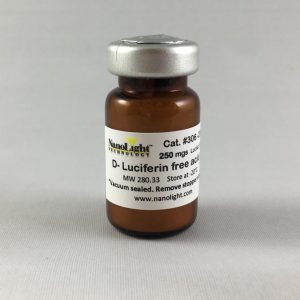
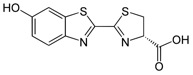
Firefly D-Luciferin Free Acid >99% (Photinus pyralis, pyrophorus, and Elateridea substrate luciferins)
This is the FREE ACID and not a water soluble salt, such as the Potassium or Sodium salts. This requires reconstitution using alkaline buffers.
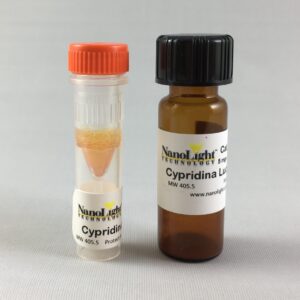
Cypridina was first characterized by Dr Osamu and Akemi Shimomura from “Umi Hotaru” Japanese Sea Fireflies in 1966. These are bottom dwelling ostracods that emit a light stream into water when disturbed presumably to deter predation. Cypridina Luciferase was first cloned by Eric Thompson, and S. Nagata under Fred Tsuji in Japan 1989. Cypridina is a 555 amino acid, 62.171 KDa protein that oxidizes the luciferin to produce blue light at 462 nm Em Max. The advantage of using the Cypridna system: it does not cross react with Coelenterazine or Firefly d-Luciferin so it may be used in multiplex assays. It is brighter then Firefly Luciferase.
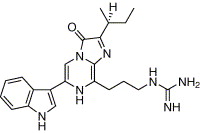
Natural occurring Cypridina Luciferin is 100% S-form. NanoLights Cypridina synthesized compound is an enantiomeric mixture of 70% S and 30% R form. The recently published paper describes that the R-form is also a luminous substrate for Cypridina Luciferase with a 3-fold lower turnover rate and not a competitive inhibitor as previously thought. Therefore, a negative impact on Cypridina bioluminescent assays is not expected.
We would like to thank the authors for the detailed analysis of our product.
Kanie S, Wu C, Kihira K, Yasuno R, Mitani Y, Ohmiya Y. Bioluminescence of (R)-Cypridina Luciferin with Cypridina Luciferase. Int J Mol Sci. 2024 Feb 26;25(5):2699.
Inouye S. Pink-colored Cypridina luciferase from Cypridina (Vargula) hilgendorfii: Oxygen-triggered luminescence reaction following NAD(P)H-FMN flavin reductase reaction. Biochem Biophys Res Commun. 2025 Feb 2;747:151285.
The advantages of lyophilized luciferins are:
pre-aliquoted in small amounts, fresh substrate for every set of experiments
long shelf-life (packed under Argon)
faster to dissolve due to its fine crystal structure
consistent quality between aliquotes
The luciferin is shipped as filtered, lyophilized, batch controlled substrate
Protocols & Manuals
How to Use
Certificates & Data
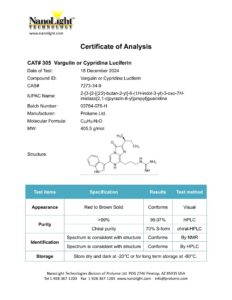
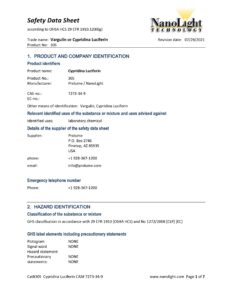
Certificate of Analysis CypridinaSafety Data Sheet Cypridina
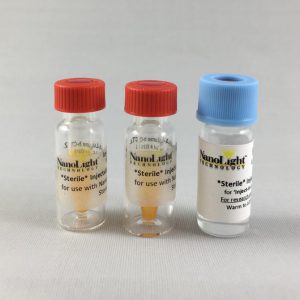
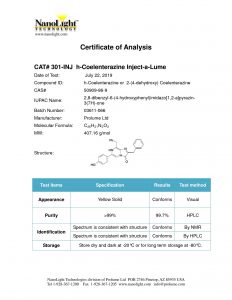
Benzyl Coelenterazine (h-CTZ) in sterile injection vials with a low retention volume. Each kit is supplied with two ‘Inject-A-Lume’ vials of 500 µg h-CTZ and a sterile ‘Fuel-Inject’ diluent.
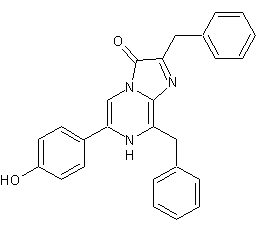
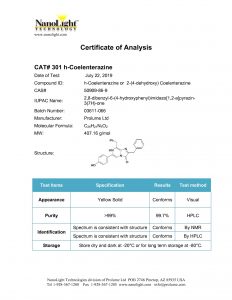
Coelenterazine-h is a a 2-deoxy derivative of native Coelenterazine.
Up to 20-fold higher initial light-output than native Coelenterazine with Apoaequorin.
Reduced but longer lasting kinetic with Renilla luciferase. Strong luminescence with ALuc and a good non-toxic alternative for NanoLuc / NanoKAZ (NLuc).
We recommend using CAT#399 NanoFuel Solvent for dissolving and stabilizing native Coelenterazine.
For maximum stability and shelf-life of the substrate we recommend NanoFuel Solvent (Cat.# 399).
As an alternative you may use Methanol to dissolve h-CTZ.
The photoprotein Aequorin is showing an up to 20-fold higher inital intensity with h-CTZ compared to native Coelenterazine.
h-CTZ is also the preferred substrate for Renilla Luciferase in HTS (high throughput screens) due to its prolonged glow kinetic.
Featured Article
Belovezhets, Tatyana & Gladkikh, D. & Omelchenko, V. & Volkova, Olga & Taranin, Alexander & Kulemzin, S.. (2025). NanoLuc/h-coelenterazine: an efficient pair for bioluminescence imaging in vivo and in vivo. Russian journal of hematology and transfusiology. 70. 146-155. 10.35754/0234-5730-2025-70-2-146-155.
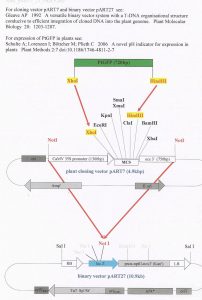
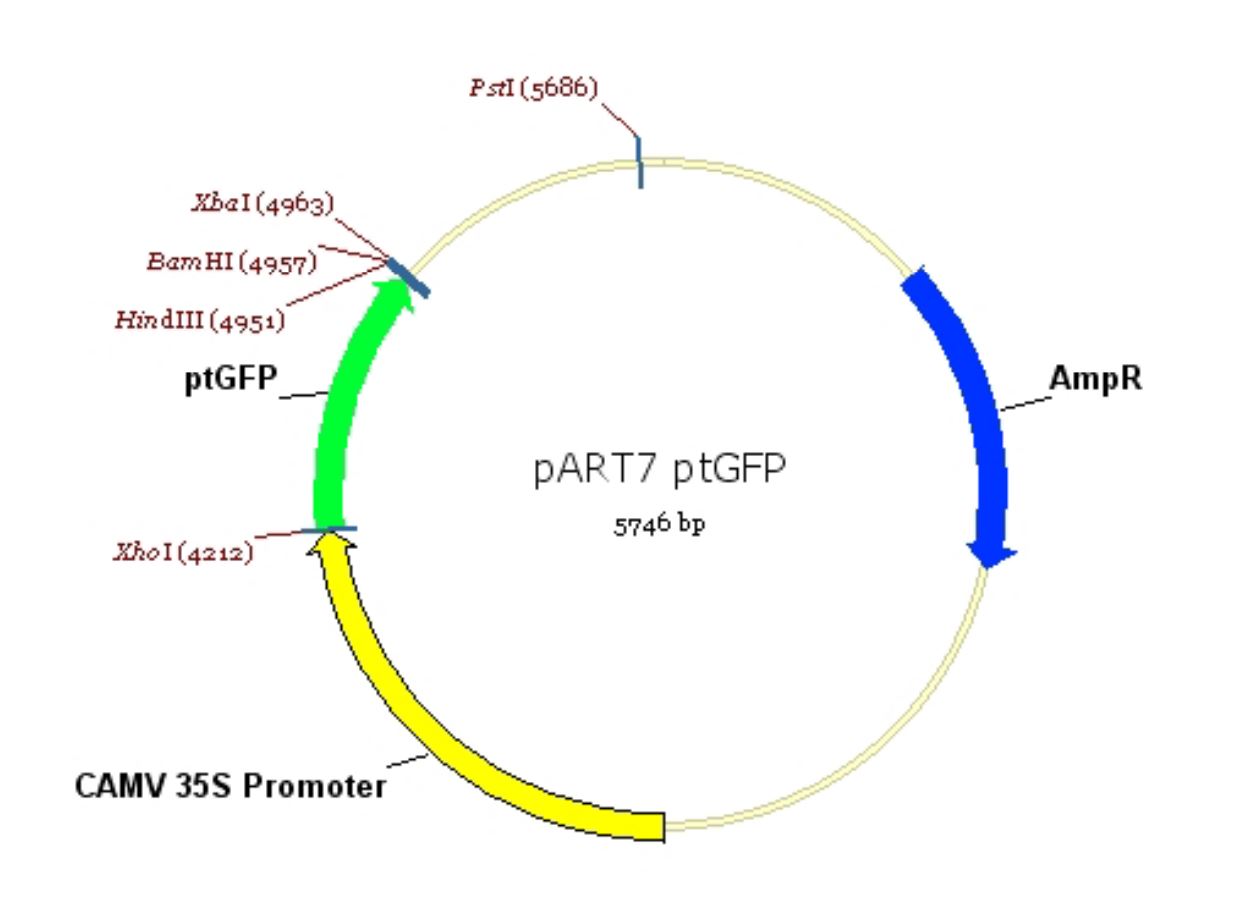
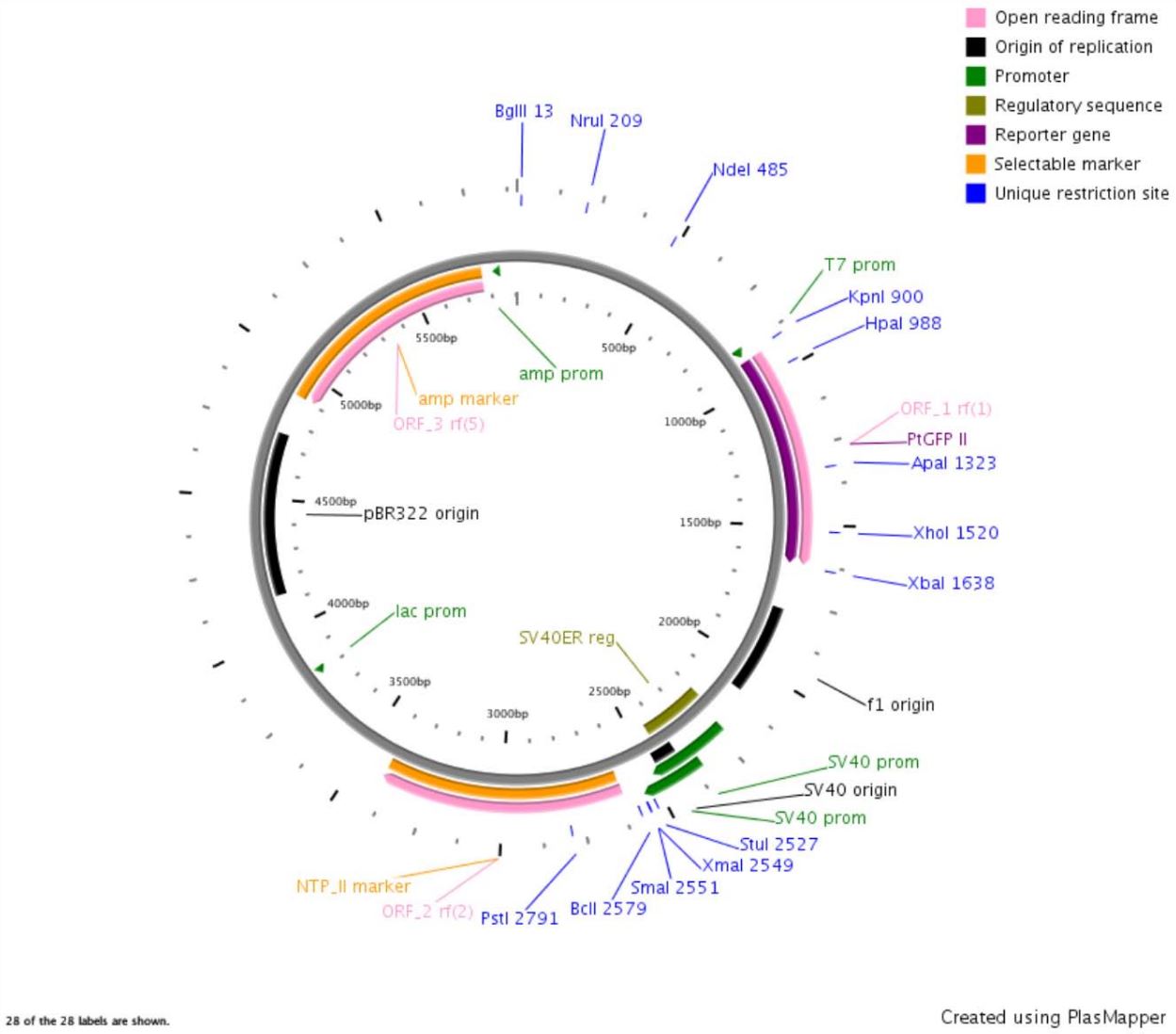
A binary vector (5 µg dry) with the whole gene cassette including Ptilosarcus GFP-gene inserted via NotI for efficient insertion of the ptGFP-gene cassette into plants’ genome via agrobacterium-mediated transformation.
Details & Info
pART27 - ptGFP Details
Vector Description
121 pART27 info PDF
By using this product, recipient is legally bound and accepts the Terms and Conditions.
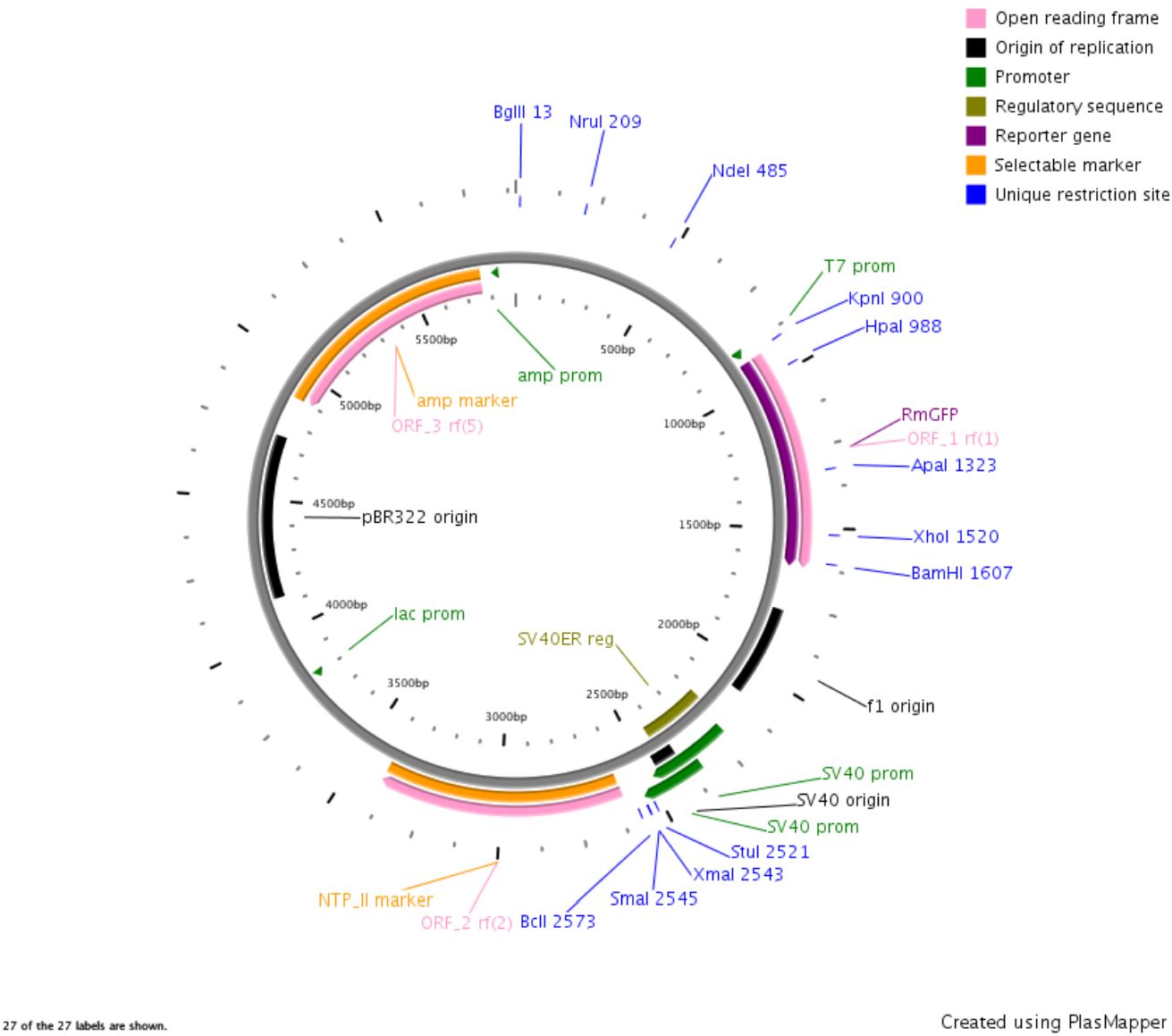
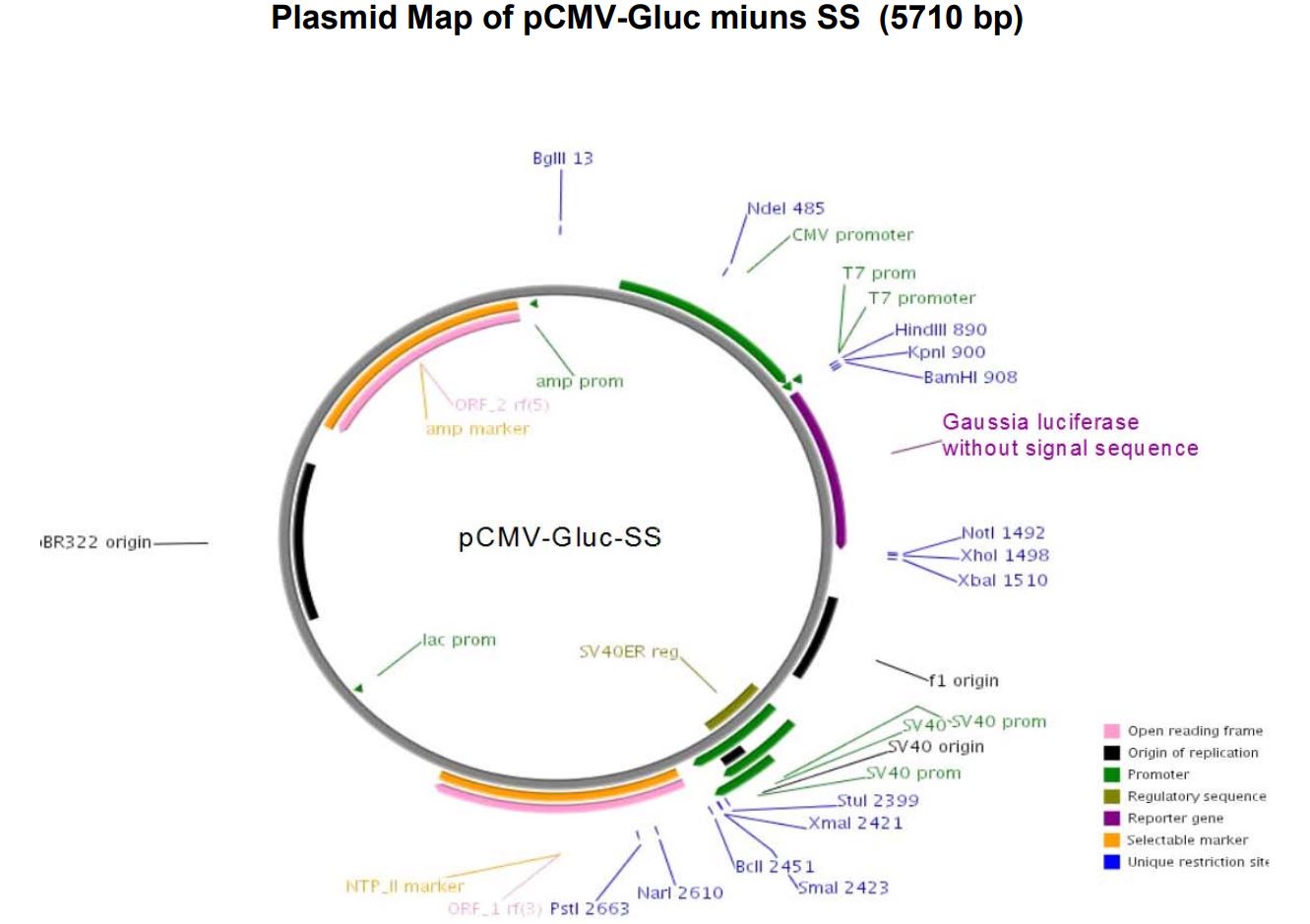
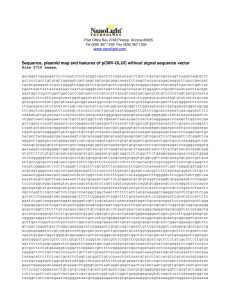
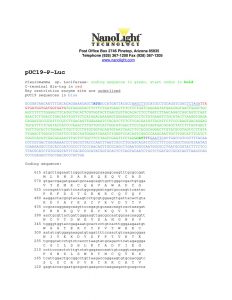
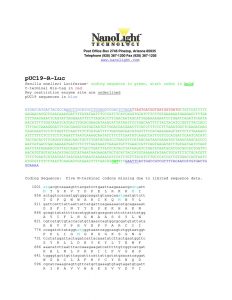
Humanized Gaussia luciferase without secretion signal. This positive control vector is very useful in evaluating the efficiency of intracellular transgene expression using Gaussia luciferase as a reporter. Also, this vector is useful for fusing Gluc to a specific protein of interest. This vector has both Ampicillin resistance and Neomycin resistance. Therefore it can be easily propagated in E. coli and can be used to establish stable cell lines expressing Gaussia luciferase.
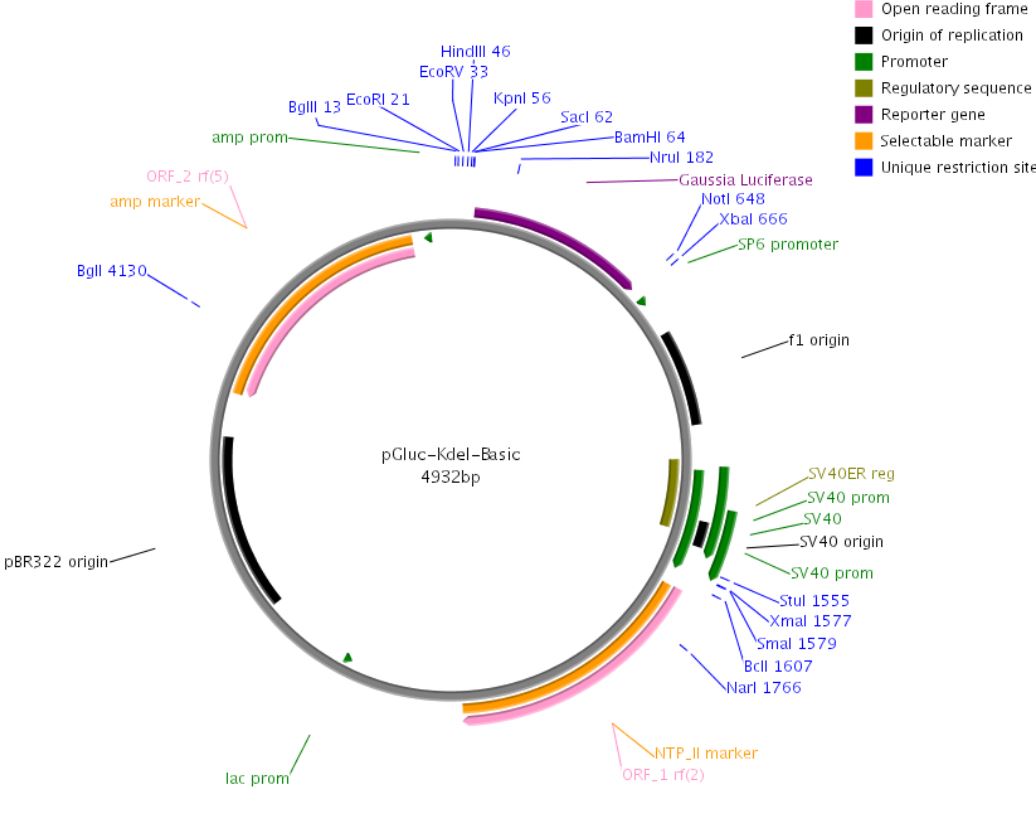
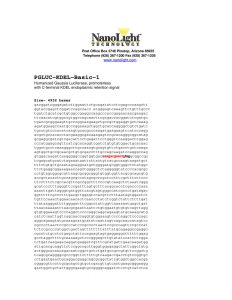
Humanized Gaussia Luciferase, promoterless; designed for insertion of your own promoters, comes with C-terminal KDEL endoplasmic retention signal for intracellular expression.
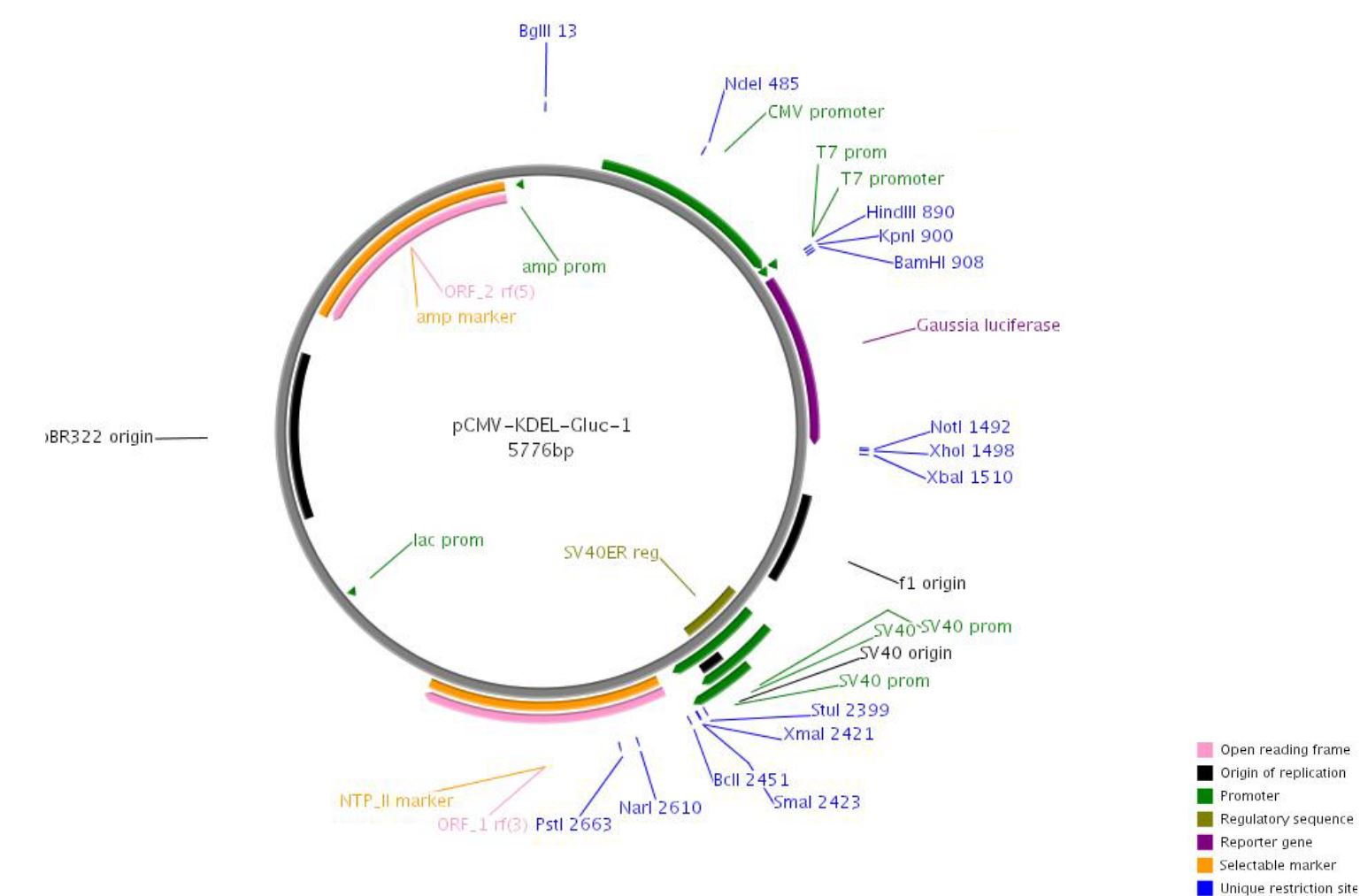
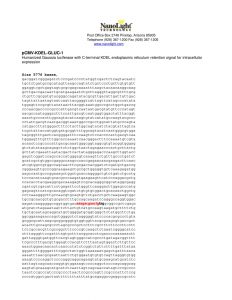
Humanized Gaussia luciferase with C-terminal KDEL endoplasmic reticulum retention signal for intracellular expression. The KDEL sequence is an endoplasmic reticulum retention signal which causes retention of the Gaussia luciferase in the endoplasmic reticulum and results in high levels of intracellular luciferase expression.
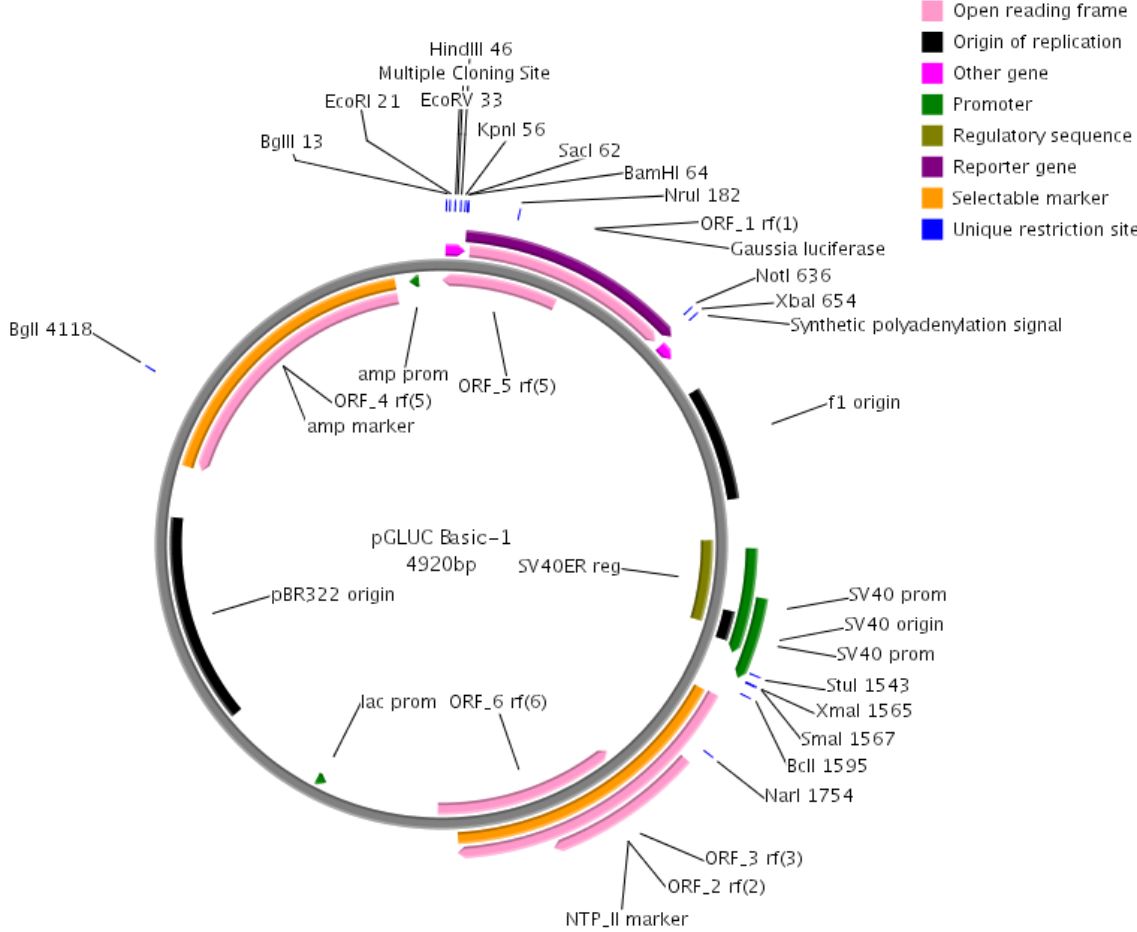
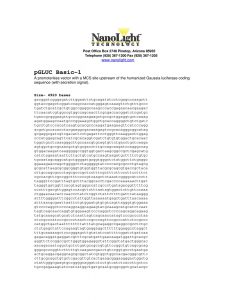
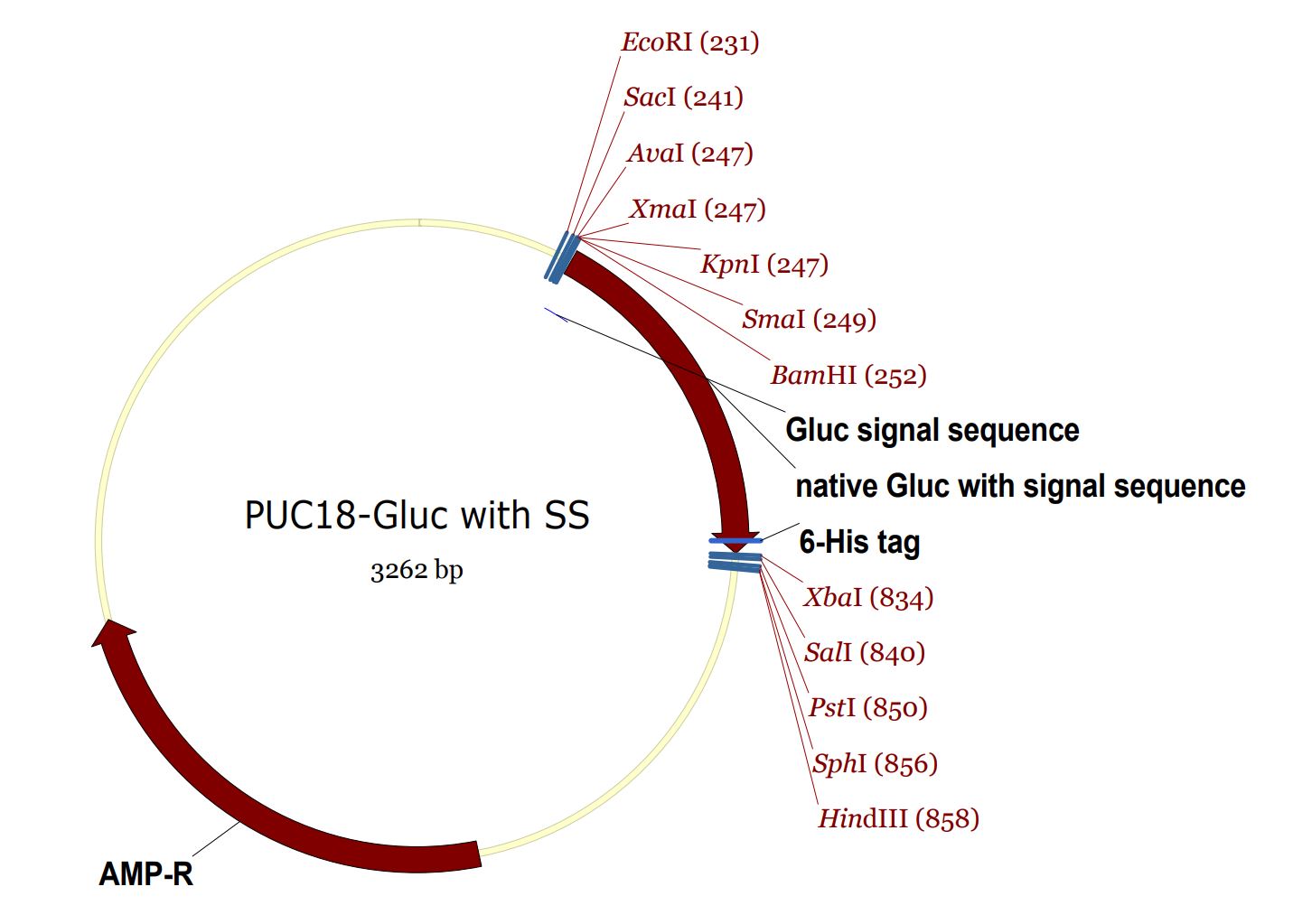
A promoterless vector with a MCS site upstream of the humanized Gaussia luciferase coding sequence (with secretion signal). This vector is designed for promoter analysis and will express secreted Gaussia luciferase.
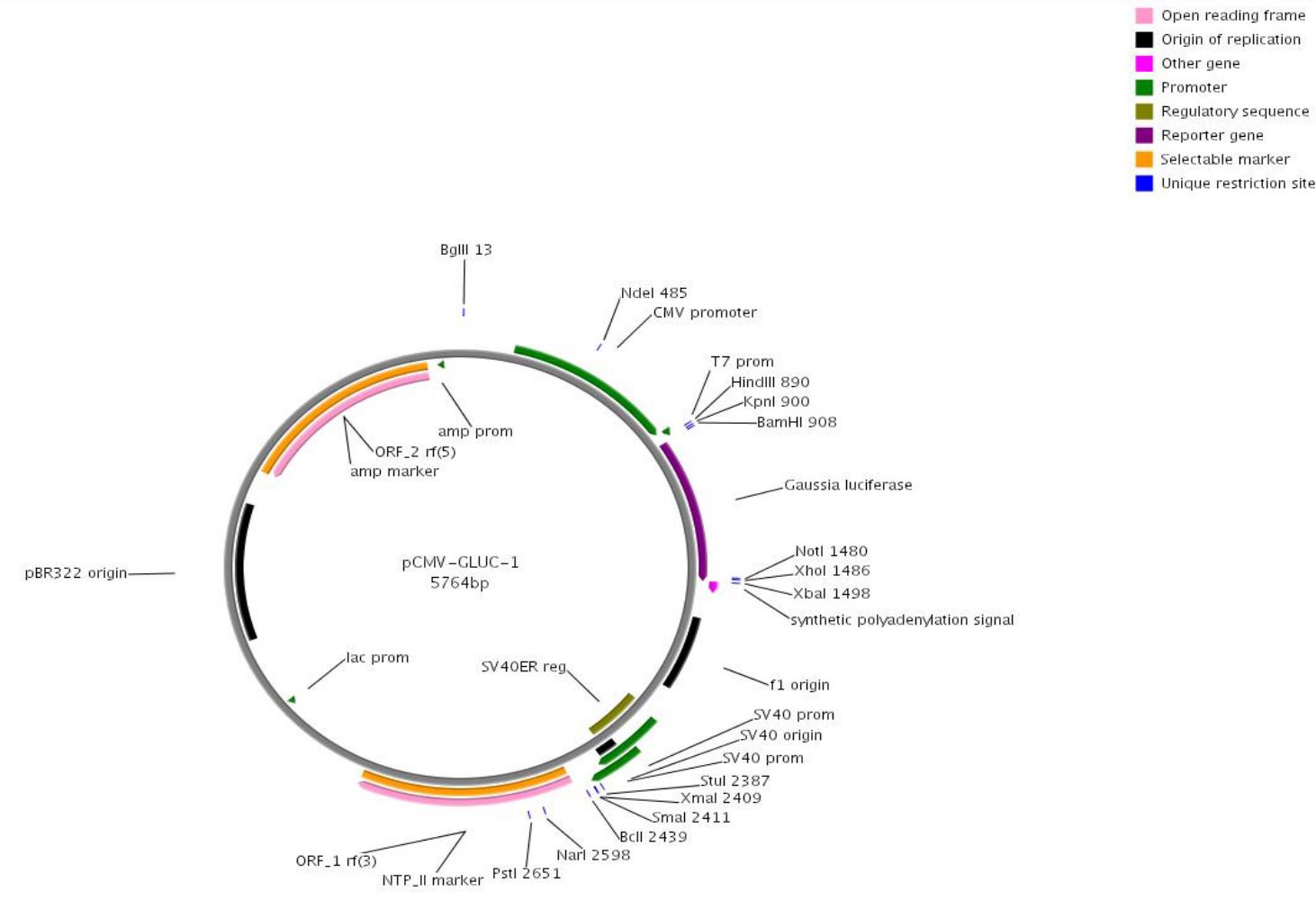
Mammalian (human) codon optimized Gaussia luciferase with N-termnal secretion signal. This product can be used as a positive control vector is very useful in evaluating the efficiency of transgene expression using Gaussia luciferase as a reporter. This vector has both Ampicillin resistance and Neomycin resistance. Therefore it can be easily propagated in E. coli and can be used to establish stable cell lines expressing Gaussia luciferase.




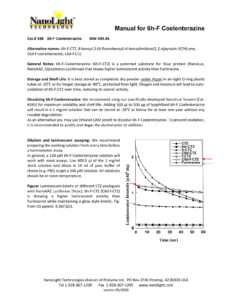
 348 Manual


 CAT# 325NLuc GLOW AssayNanoFuel® GLOW Assay for Oplophorus Luciferases
Introducing a new GLOW Assay kit that will work with Oplophorus Luc...read morel
CAT# 325NLuc GLOW AssayNanoFuel® GLOW Assay for Oplophorus Luciferases
Introducing a new GLOW Assay kit that will work with Oplophorus Luc...read morel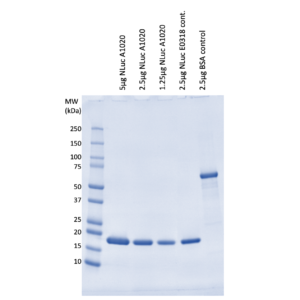 CAT# 381NanoKAZ Luciferase (NLuc) ProteinNanoKAZ Luciferase, an Oplophorus Luciferase mutant is one of the smallest and brightest luciferases. This recombinant ...read morel
 CAT# 324NLuc FLASH AssayNanoFuel® FLASH Assay for Oplophorus Luciferases
NanoFuel FLASH assay buffer is an alternative for assays that are usi...read morel
CAT# 324NLuc FLASH AssayNanoFuel® FLASH Assay for Oplophorus Luciferases
NanoFuel FLASH assay buffer is an alternative for assays that are usi...read morel


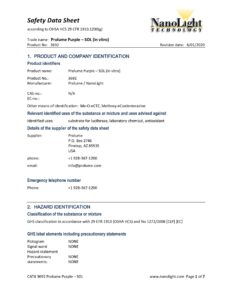
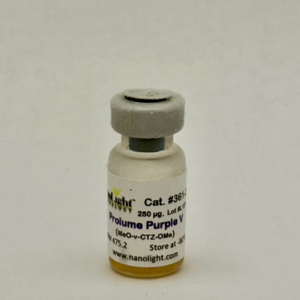 CAT# 361Prolume Purple VMethoxy-v-Coelenterazine-Methoxy (Me-O-v-CTZ-O-Me) is a new synthetic analogue of v-Coelenterazine with two additionalÂ...read morel
 CAT# 370v-CoelenterazineV-Coelenterazine (V-CTZ) is a synthetic analogue of Coelenterazine with an additional Benzyl ring. This compound has ...read morel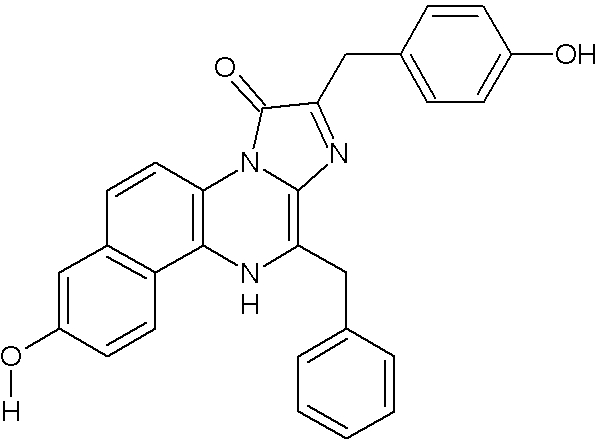
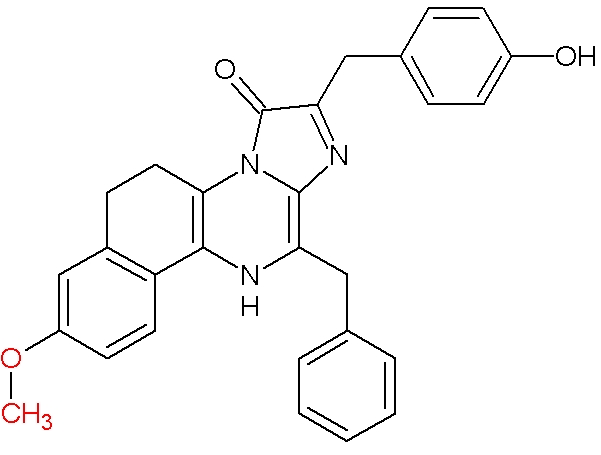
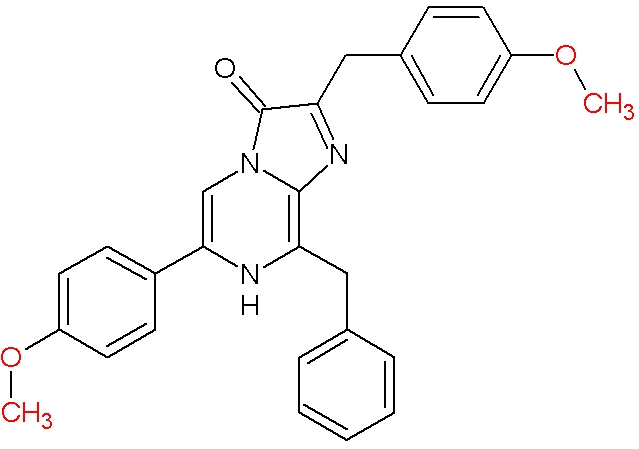
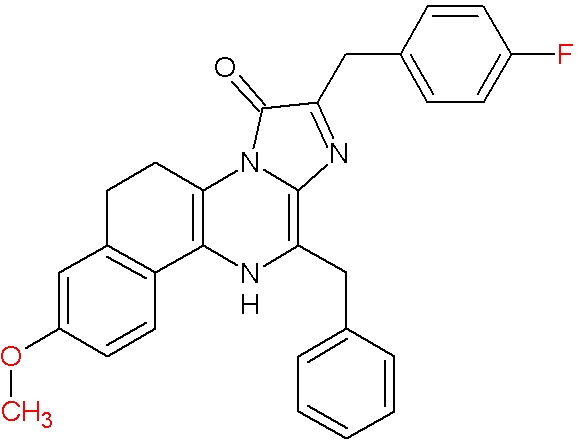
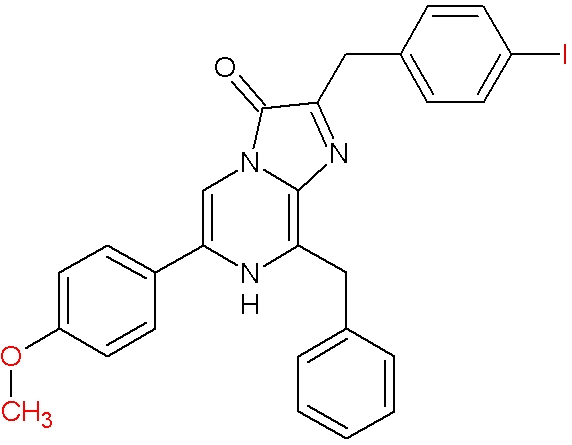
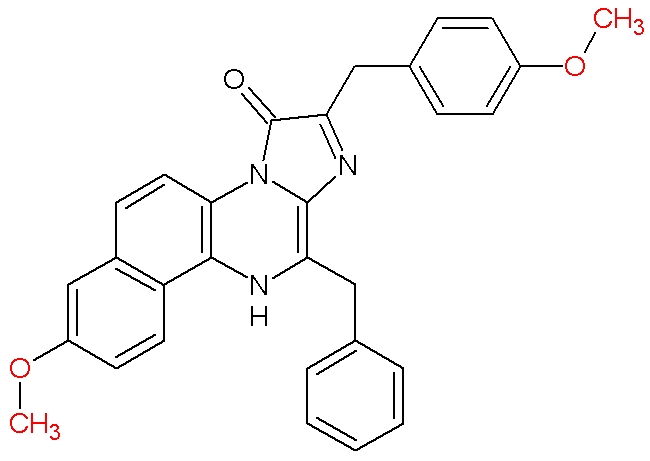
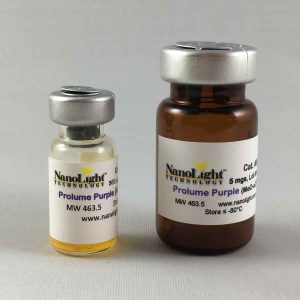 CAT# 369Prolume PurpleMethoxy e-Coelenterazine analog quenching the emission maximum from 475 nm to 405 nmread morel
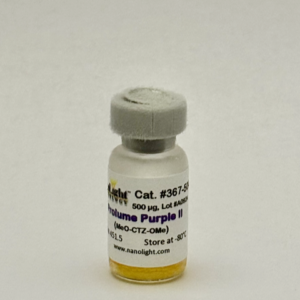 CAT# 367Prolume Purple IIProlume Purple II or Methoxy-Coelenterazine-Methoxy (Me-O-CTZ-O-Me) is a new synthetic analogue of Coelenterazine wit...read morel
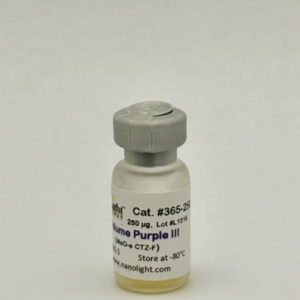 CAT# 365Prolume Purple IIIMethoxy-eCoelenterazine-F (Me-O-eCTZ-F) is a new synthetic analogue of e-Coelenterazine-F with an additional methoxy gro...read morel
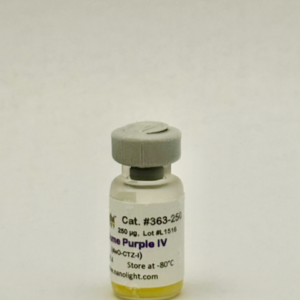 CAT# 363Prolume Purple IVProlume Purple IV or Methoxy-Coelenterazine-Iodine (Me-O-CTZ-I) is a new synthetic analogue of Coelenterazine-I with an...read morel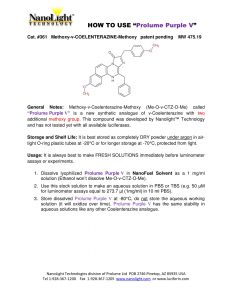
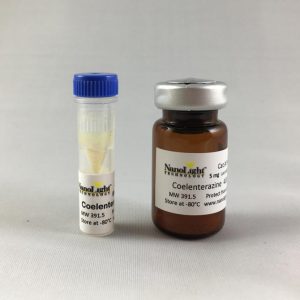 CAT# 340Coelenterazine 400aA substrate for Renilla luciferases (Rluc) but not Gaussia luciferase. It is used for real-time detection of calcium io...read morel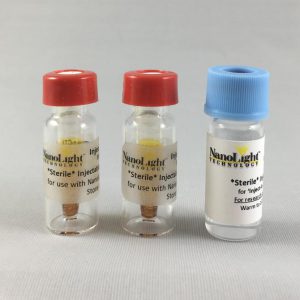
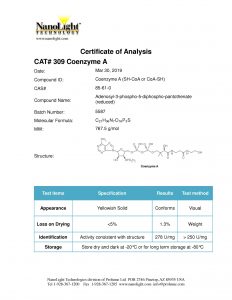
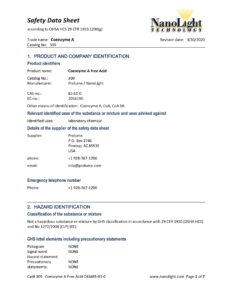

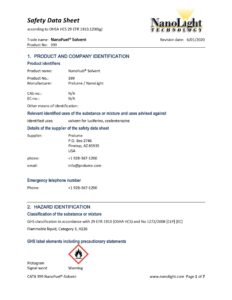
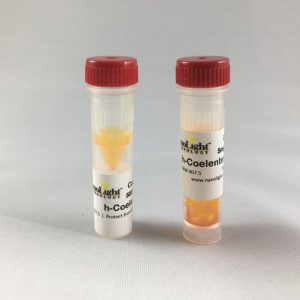 CAT# 301Coelenterazine hCoelenterazine-h is a a 2-deoxy derivative of native Coelenterazine.
Up to 20-fold higher initial light-output than n...read morel
CAT# 301Coelenterazine hCoelenterazine-h is a a 2-deoxy derivative of native Coelenterazine.
Up to 20-fold higher initial light-output than n...read morel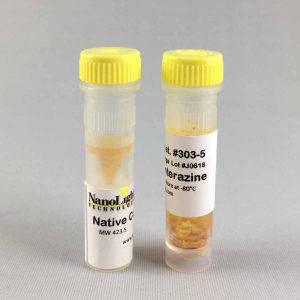 CAT# 303Coelenterazine native>95% pure, native Coelenterazine. lyophilized.read morel
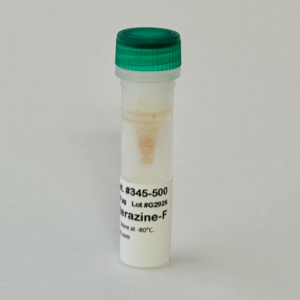 CAT# 345Coelenterazine FCoelenterazine F is the preferred substrate for Aequorin and used as based calcium indicator.
When it reconstitutes...read morel
CAT# 345Coelenterazine FCoelenterazine F is the preferred substrate for Aequorin and used as based calcium indicator.
When it reconstitutes...read morel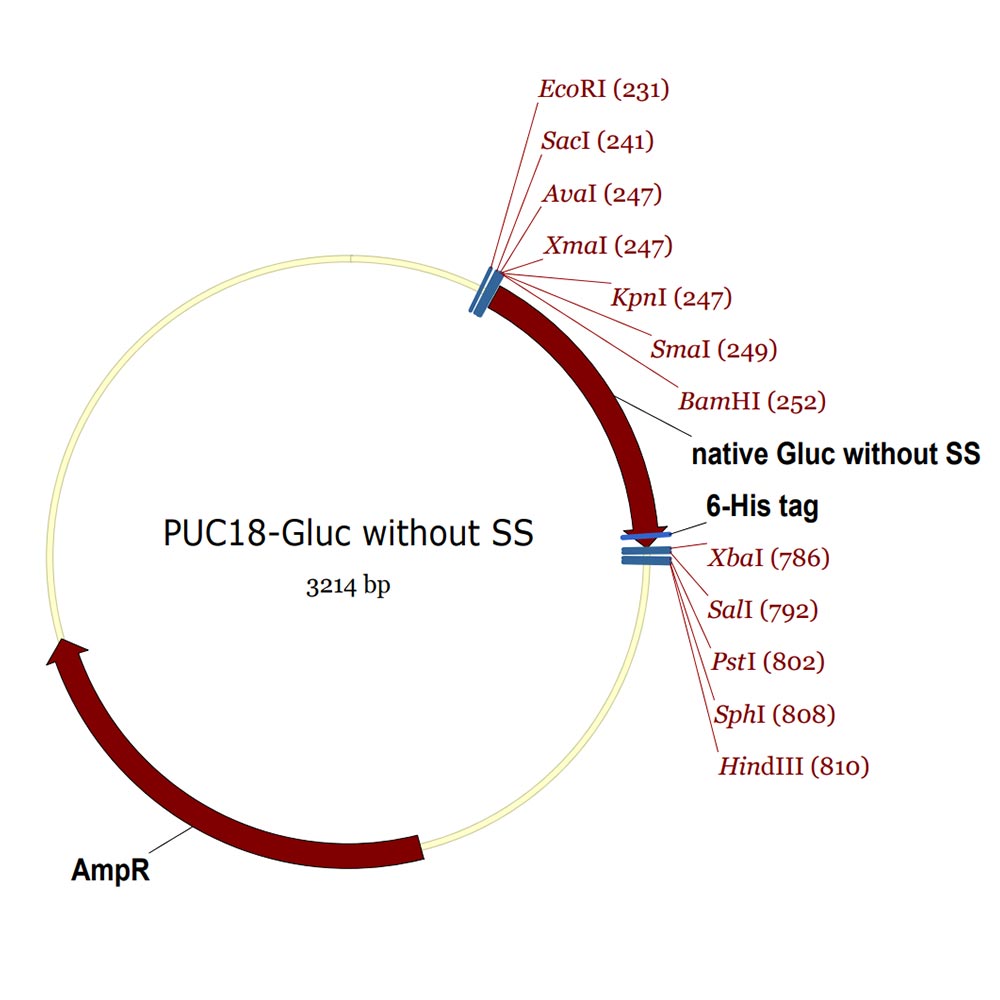
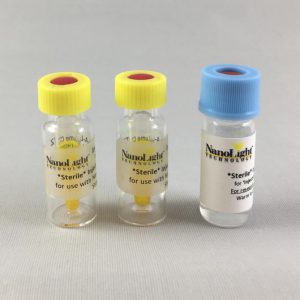
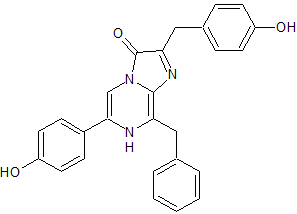
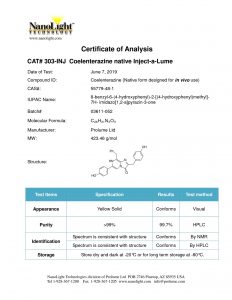
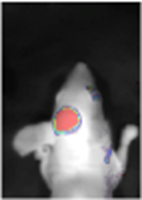 Coelenterazine (native-CTZ) in sterile injection vials with a low retention volume. Each kit is supplied with two ‘Inject-A-Lume’ vials of 500 µg CTZ and 500 µl of sterile ‘Fuel-Inject’ diluent.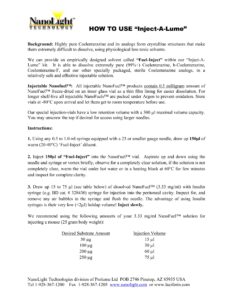
 CAT# 319GLuc FLASH AssayNanoFuel® FLASH Assay for Gaussia Luciferase
The NanoFuel® FLASH Assay kit provides enough buffer for approx. 1000 ...read morel
CAT# 319GLuc FLASH AssayNanoFuel® FLASH Assay for Gaussia Luciferase
The NanoFuel® FLASH Assay kit provides enough buffer for approx. 1000 ...read morel